Objective: Teach young students about habitats and food webs by making animal puppets and acting out food web relationships.
Materials:
• sticks (tongue depressor style)
• glue sticks
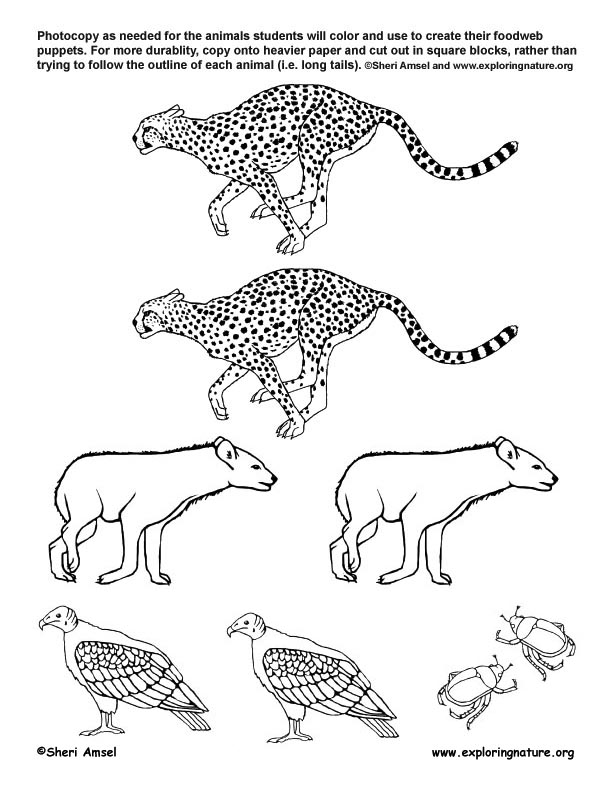
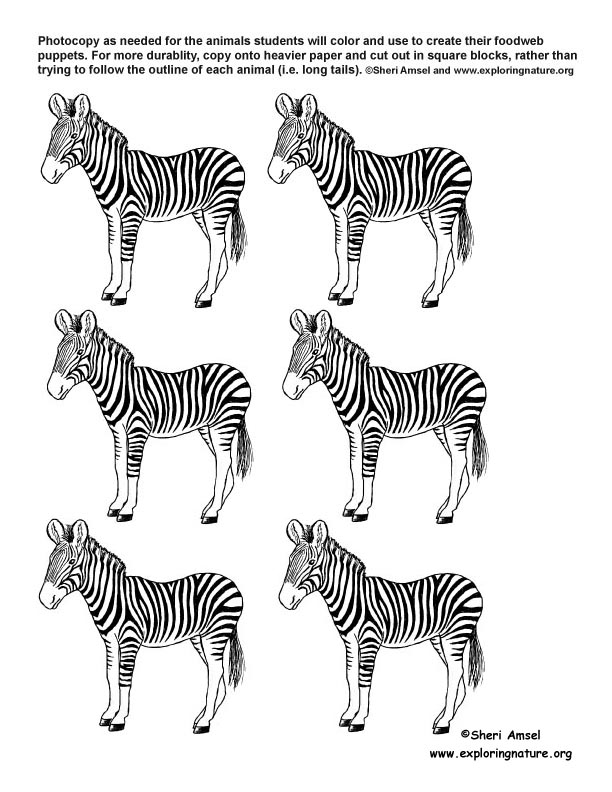
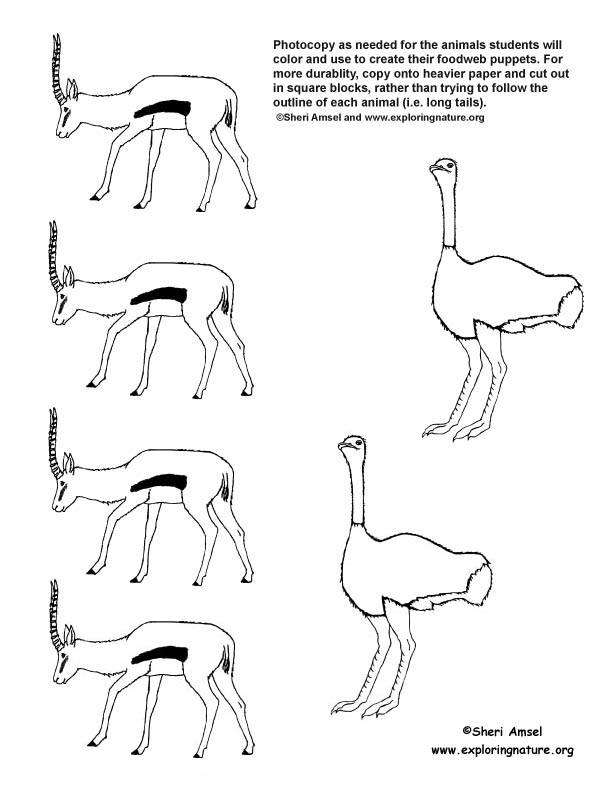
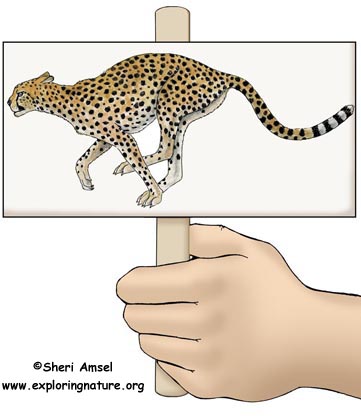
• animal outline sheets as needed (2 cheetahs, 2 hyenas,
6 zebras, 2 ostriches, 4 gazelles, 2 vultures, and 2 dung beetles)
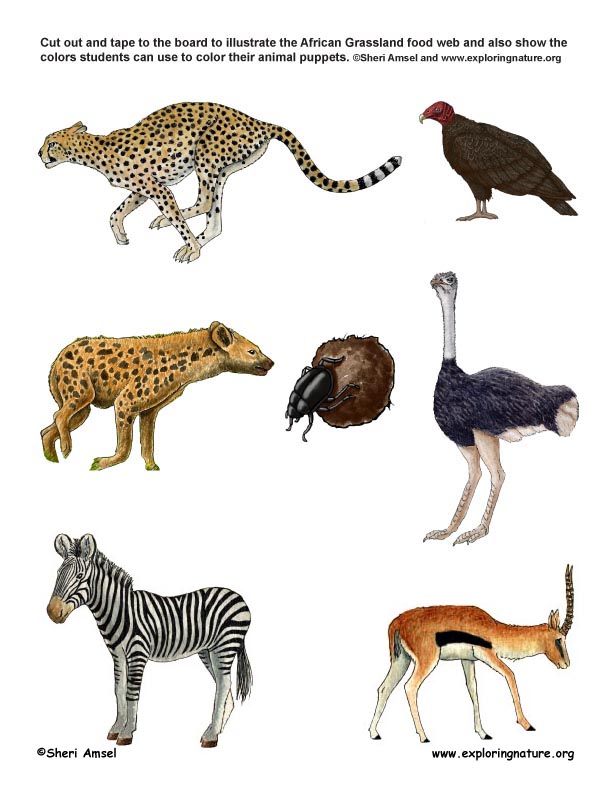
• color animals for making a blackboard food web (and as coloring guide)
• blackboard on which to display a sample food web with animal pictures
(and draw food consumption arrows in chalk)
• green sheet (grass)
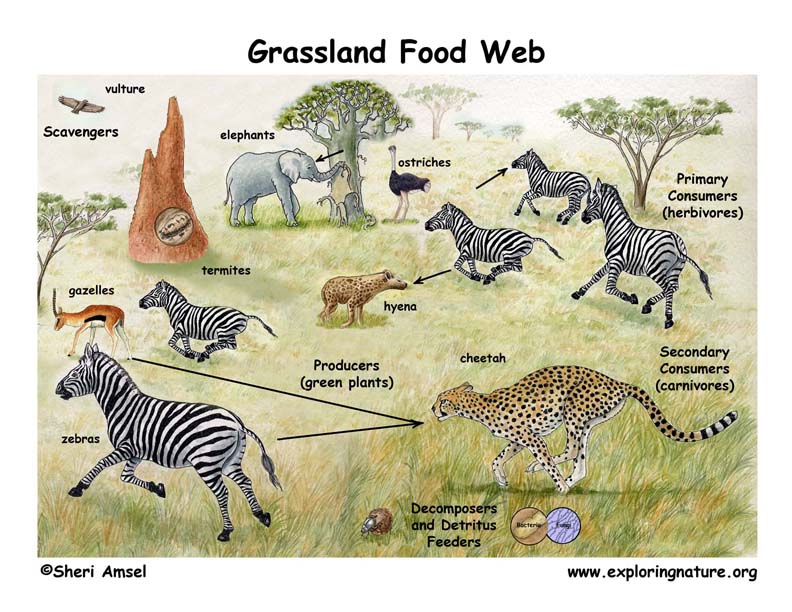
• African grassland food web poster
Steps:
1) Cut out the color animal pictures and tape them onto the chalk board. Put the carnivores on top, the herbivores in the middle and the scavengers and decomposers off to one side. Draw grass at the bottom.
2) Now explain what a food web is and ask your students to guess what each animal eats. Gently guide them through the food web and talk about who eats who (or what), drawing arrows from the “food” to the animals that eat them. Show the scavengers and detritivore (decomposers) last, as they will eat any animal after its death (even the carnivores).
3) Assign each student an animal (if they choose their own, most may choose cheetahs). They can trade animal roles later.
4) Have students color their animals.
5) They should then glue their animals to their sticks using glue sticks.
6) Push four desks together and lay the green sheet over the desks to represent the grassland. Tell students that they are going to act out an African grassland food web.
7) First call in the herbivores. Explain that the sheet is grass. Tell the herbivores to come in and eat grass (acting out eating only!).
8) Then call in the carnivores and let them chase the herbivores around the desks briefly (no running) and catch one herbivore (you may want to have the cheetahs catch a herbivore that you are holding to prevent any food web trauma).
9) The rest of the herbivores should then settle back to grazing on the other side of the grassland from the cheetahs and their “kill”.
10) Next tell the carnivores that they are full and need to take a nap in the tall grass (have them move to one side).
11) Now comes the scavengers (hyenas and vultures). They feed on the dead herbivore for a bit.
12) Now tell them that there is not much left of the prey, so the scavengers will move off to rest.
13) Last call in the detritivores (often called decomposers – dung beetles). They will clean up the last of the prey.
14) Now your food web is complete. Everyone is full.
15) Talk about what they learned.
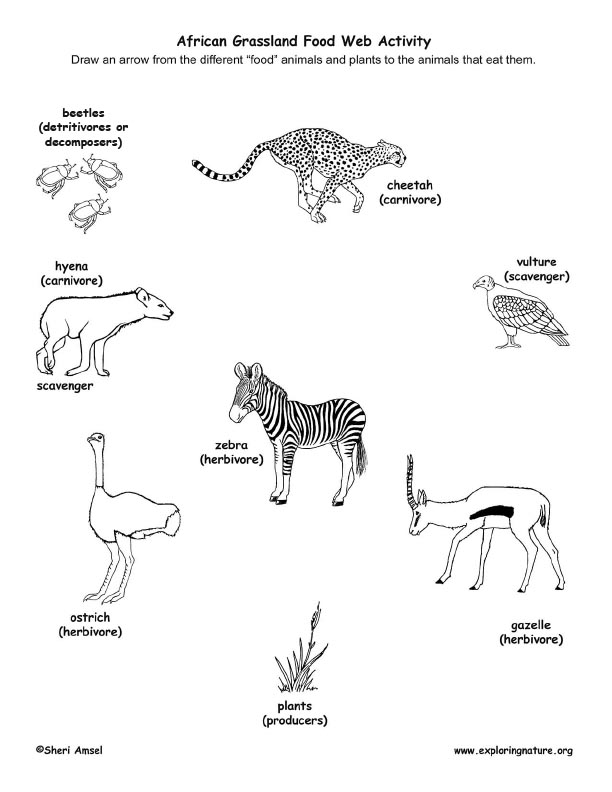
16) Assess their understanding with the African Grassland Food Web Matching Activity Sheet.
(See key and high resolution version for printing in PDF below)