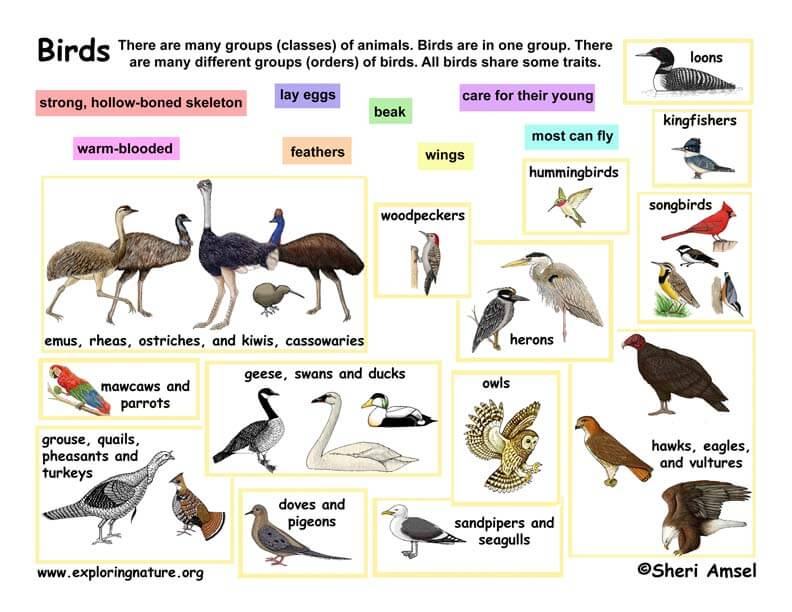
There are more than 30 Groups or Orders of Birds with more than 10,000 different species worldwide. Below are a sampling of some 14 Orders of birds. The different orders are separated by different traits. See if you can tell how the following orders of birds are similar and different.
Birds Groups – Orders
Struthioniformes — Cassowaries, Emus, Kiwis, Ostriches and Rheas
Galliformes — Grouse, Quails, Pheasants and Turkeys
Anseriformes — Ducks, Geese, and Swans
Psittaciformes — Macaws and Parrots
Strigiformes — Owls
Apodiformes — Hummingbirds
Coraciiformes — Kingfishers
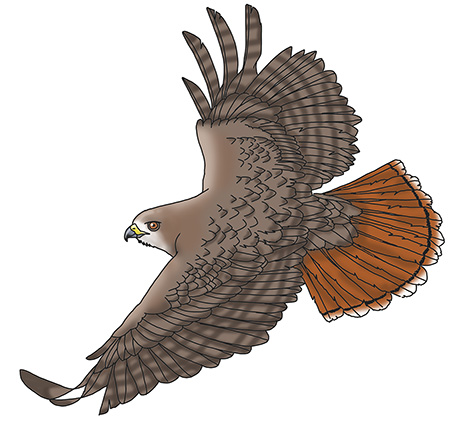
Falconiformes — Hawks, Eagles, and Vultures
Gaviiformes — Loons
Piciformes — Woodpeckers
Charadriformes — Sandpipers and Seagulls
Ciconiiformes — Herons
Columbiformes — Doves and Pigeons
Passeriformes (Songbirds or Perching Birds) — Buntings, Cardinals, Catbirds, Chats, Chickadees, Crossbills, Crows, Dippers, Finches, Flycatchers, Goldfinches, Gnatcatchers, Gnateaters, Jays, Kinglets, Larks, Magpies, Martins, Mockingbirds, Nuthatches, Ovenbirds, Pipits, Pittas, Robins, Ravens, Shrikes, Sparrows, Starlings, Swallows, Tits, Thrushes, Waxwings, Weavers, Woodcreepers, Woodwarblers, Wrens, and Vireos.
Look at the Bird Orders on the sheet* below. Can you see what makes the birds in each group alike? Can you see how one group differs from another?
*Note that there is a color guide for K-3, 3-6 and 7th grade and up.