


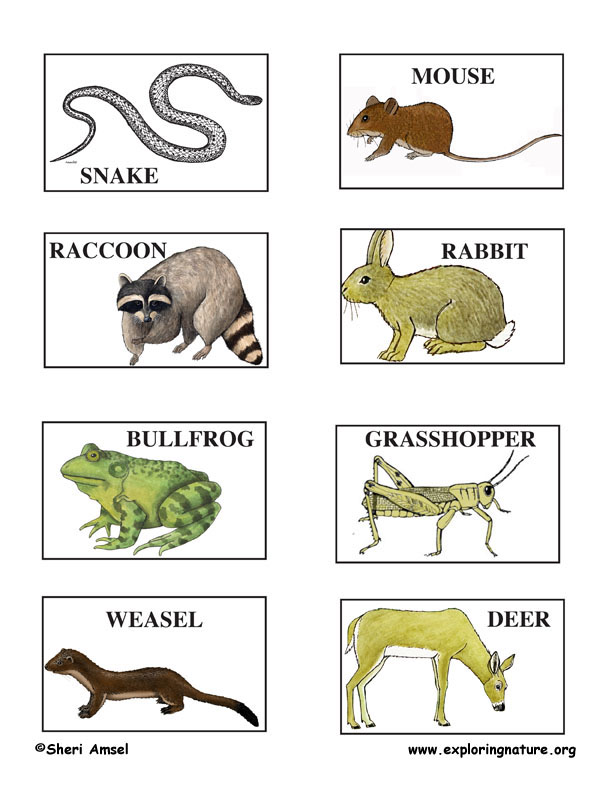
On the Who Eats Who Handout are all the species in a food web and what they eat. You can hand this out to your students or have them research their own species feeding habits to make this activity an interdisciplinary with ELA components. Students can each be responsible for one part of the food web.
To make this into a game…
- Put a roll of tape on the back of each animal picture and stick them to a student’s desk.
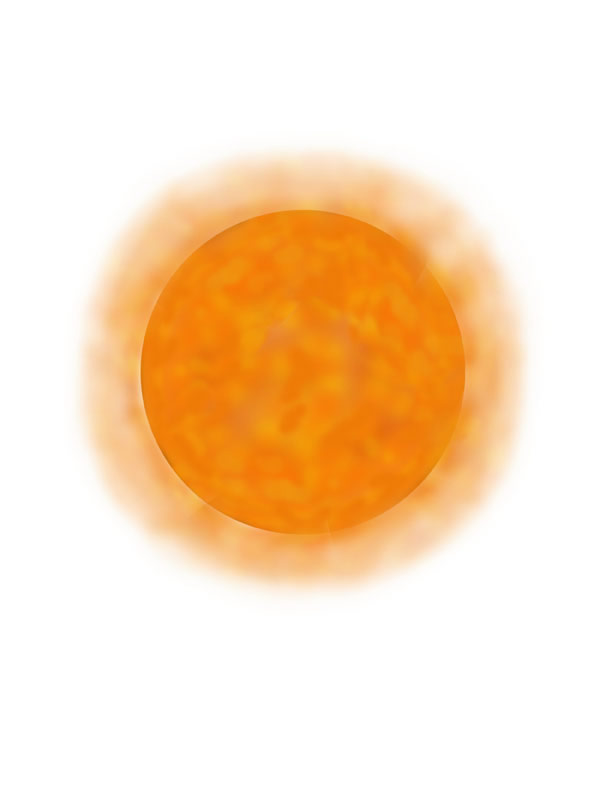
- Place the sun on the board and talk about how the sun supplies the energy for producers to grow. You can use the lecture from “ Food Web Lecture with Producer-Consumer-Decomposer Chart” to teach this lesson.
- Call for all producers.
- Call for all primary consumers or herbivores.
- Call for all secondary consumers or omnivores.
- Call for all tertiary consumers or carnivores.
- Call for all decomposers.
- When everyone has taped their species to the board, point out how the energy flows through a food web.
- Leave your food web up for a few days and talk about different aspects of it, study the animals in more depth, talk about local food webs versus food webs on an African Savannah or Amazon Rainforest.
- Print out food web graphics below (or in pdf) to use in your project.


Building A Classroom Food Web — Who Eats Who
Producers
- crops, berries, trees, grasses
Primary Consumers – Herbivores
- mouse — grass, plants, mushrooms, berries, tree buds
- deer — grass, plants, mushrooms, berries, crops, trees
- grasshopper — grass, plants, berries, crops, trees
- rabbit — grass, plants, mushrooms, berries, tree buds
- chipmunk — grass, plants, mushrooms, berries, nuts and cones
- squirrel — grass, plants, mushrooms, berries, nuts and cones
Secondary Consumers – Omnivores
- bullfrog — grasshopper, earthworms, small fish
- snake — mouse, grasshopper
- raccoon — mushrooms, crops, mouse, bird eggs, berries, nuts and cones
Tertiary Consumers – Carnivores
- weasel — mouse, grasshopper, rabbit, chipmunk. squirrel
- bear — mushrooms, fish, berries, nuts, mouse, grasshopper, rabbit, chipmunk, squirrel
- fox — bird eggs, berries, nuts, mouse, grasshopper, rabbit, chipmunk, squirrel
- eagle — mouse, rabbit, chipmunk, squirrel, snake, small raccoon, baby weasel
- hawk — mouse, rabbit, chipmunk, squirrel, snake, small raccoon, baby weasel
- owl — mice, grasshopper, rabbit
- mountain lion – mouse, rabbit, chipmunk, squirrel, snake, raccoon, weasel
- coyote — mouse, rabbit, chipmunk, squirrel, snake, small raccoon, baby weasel
- bobcat — mouse, rabbit, chipmunk, squirrel, snake, raccoon, weasel
Decomposers
- Indian pipes — everything once they are dead
- mushrooms — everything once they are dead