

Environmental Issues
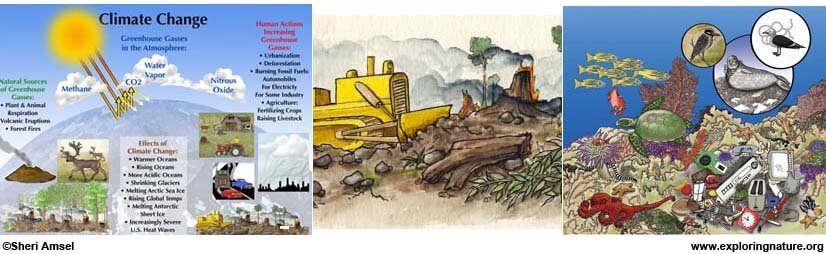
The word environment often makes people think of protecting the Earth, but in truth the word environment is a scientific term. It means all the living and non-living things on Earth. Living things (biotic) include animals, plants, bacteria, algae, fungi, etc. Nonliving things (abiotic) include rocks, mountains, streams, lakes, rain, snow and even clouds, oxygen and carbon dioxide.
The Earth has many interconnecting cycles that keep it in balance. The water cycle keeps rain and snow falling and evaporating back up to the clouds over and over. The oxygen cycle depends on plants releasing oxygen that animals use and recycling carbon dioxide that they release. The nutrient cycle works as plants make energy from the sun and provide food for animals, which then release their nitrogen when they die back into the environment. The nitrogen is then used to nourish new growing plants all over again. These cycles are how our environment is balanced.
The environment does change over time. Glaciers advance and retreat. Temperatures change. Animals go extinct and populations evolve. The continents slowly drift over millions of years. Volcanoes erupt and spew carbon dioxide into the air. Hurricanes flatten forests and change the shape of shorelines.
Though our planet may seem like a vast and powerful place, we are affecting the Earth’s biosphere. There are more than 6 billion people on Earth and our activities do affect the environment. In the topics below, read about how we have affected the planet and what we can do to protect it for generations to come.
About the Environment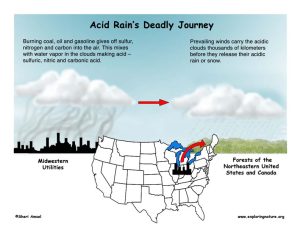
Acid Rain
Acid Rain – How Environmental Factors Influence the Growth of Organisms (NGSS 6-8th Grade)
Coral Reefs in Peril
DDT Disaster – Human Impacts on Earth Systems (6-8 Grade NGSS)
Deforestation
Desertification
Disappearing Birds – Human Impacts on Earth Systems – Reading and Performance Task (6-8 Grade NGSS)
Endangered Species
Endangered Species – The Giant Panda
Food Security – Human Impacts on Earth Systems – Reading and Research (6-8 Grade NGSS)
Global Warming & Climate Change
Greenhouse Effect VS. Global Warming – Reading and Diagram (6-8 NGSS)
Habitat Loss
Invasive Species
Keystone Species – Sea Otter
Keystone Species – Sharks
Keystone Species – The African Elephant
Keystone Species – The American Alligator
Ocean Pollution Questions from School Kids
Over-Fishing Our Oceans
Pollution (Light)
Pollution (Noise)
Pollution (Ocean)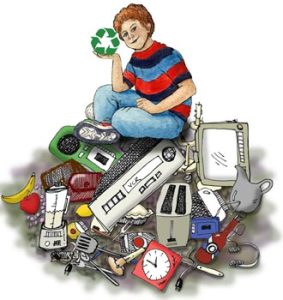
Recycling in America
Rice Cultivation Issues – Human Impacts on Earth Systems – Reading and Research (6-8 NGSS)
Solar Energy
Too Much Trash
Wetlands – Why Are They Important?
Related Additional Information:
Acid Rain Lecture and Activity (Understanding pH)
Green Issues – Staying Informed
Related Activity:
Build a Giant Earth Day Poster
Butterfly Gardens
Celebrate Earth Day – 10 Activities
Endangered Animals Coloring Page
Endangered Animal Word Searches (2 age levels)
Environmental Issues – Activities (NGSS)
Erosion Activity
Global Warming Activity (Inquiry-based)
Join an Environmental Group as a Class
Rotten Game – How Long Does it Take to Decompose?
Recycling Game – Can it Be Recycled?
Smog Alert! Activity – What Conditions Cause Smog to Form?
Will the Melting of the Polar Ice Caps Affect the Saltiness of the Ocean?
Related Testing and Assessment:
Endangered Species Labeling Pages
Global Warming and Climate Change – Multiple Choice
Global Warming – Comic Relief Activity
Match the Animals to Their Homes Game