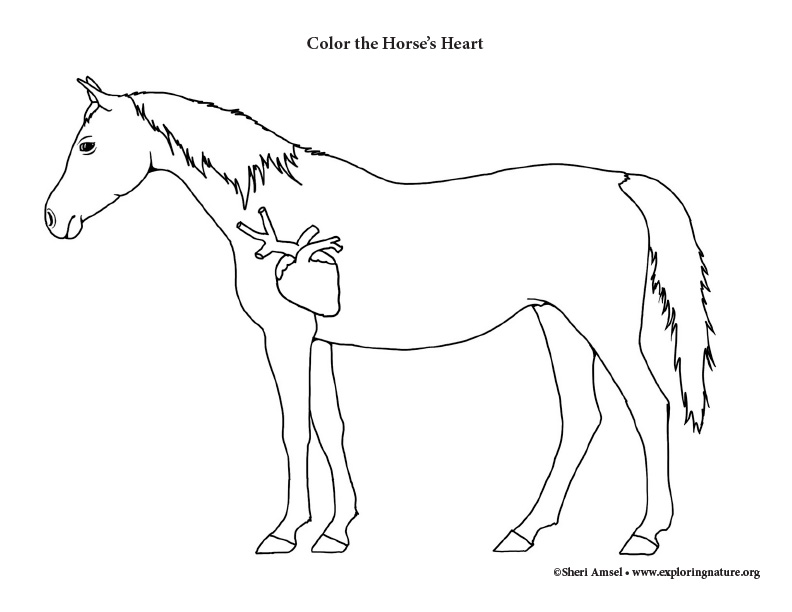
All animals have some kind of circulatory system. In mammals, all the blood stays inside the heart and blood vessels as it moves around the body. This is called a closed system. This helps the blood move oxygen and nutrients evenly around a mammal’s large body using the muscular heart as a pump.
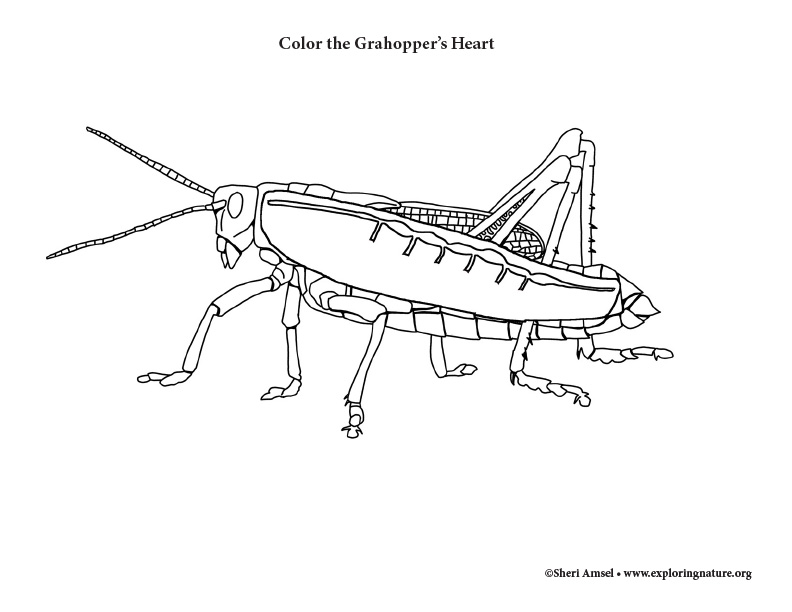
A small insect, like the grasshopper, has a tube-shaped heart that runs down its back. This part of their circulatory system is closed like a mammal’s, but when a grasshopper’s heart pumps its blood, it billows out into the whole body. Then it is an open system where it can easily flow around the grasshopper’s small body cavity to reach all its cells.
Insects don’t need a completely closed circulatory system, like we do, because they are much smaller. Also, their blood doesn’t move oxygen the way it does in a mammal. That is because insects don’t breath through lungs. They don’t need oxygen moved around in their blood. They have small openings on the sides of the body, called spiracles, through which they breathe.
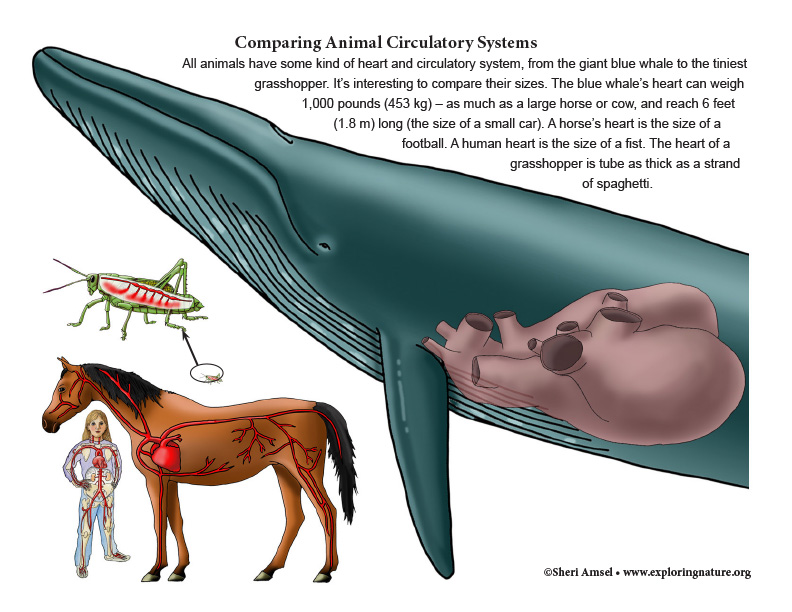
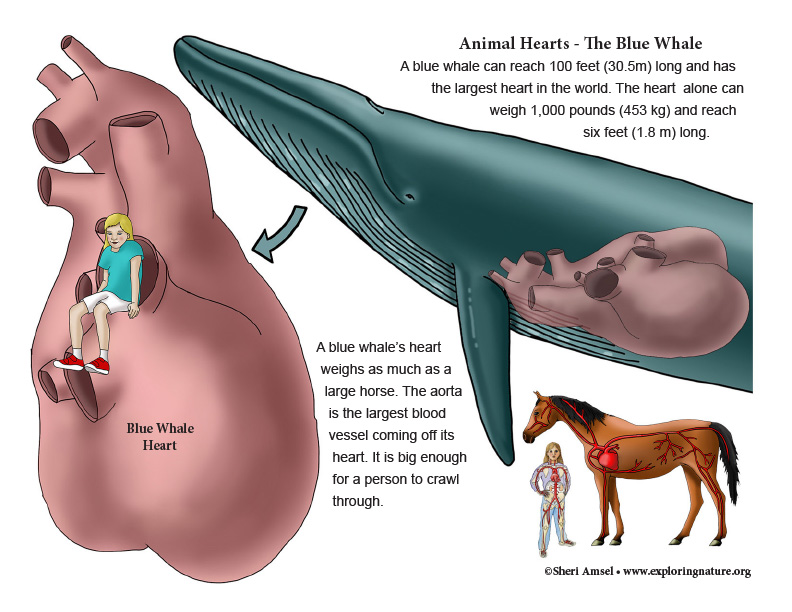
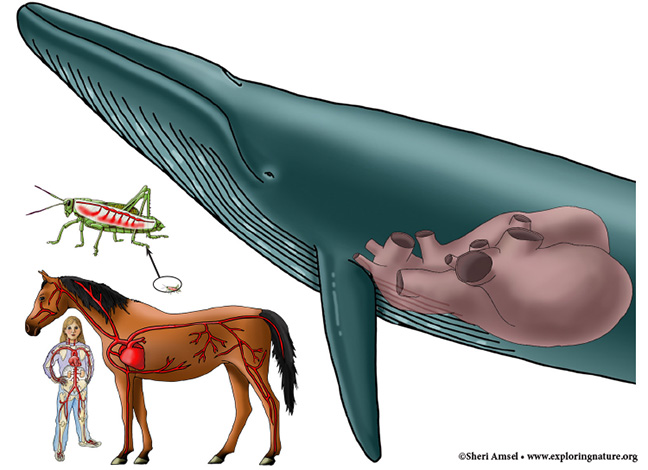
It’s interesting to compare the sizes of the different circulatory systems. The blue whale’s heart can weigh 1,000 pounds (453 kg) – as much as a large horse or cow, and reach 6 feet (1.8 m) long (the size of a small car). A blue whale’s heart weighs as much as a large horse. The aorta is the largest blood vessel coming off its heart. It is big enough for a person to crawl through. A horse’s heart is the size of a football. A human heart is the size of a fist. The heart of a grasshopper is tube as thick as a strand of spaghetti.