

Myiarchus crinitus
Range
They breed from southern Canada to the Gulf coast. They spend the winters in southern Florida and the tropics.
Habitat
They are found in deciduous and mixed woods.
Body Traits
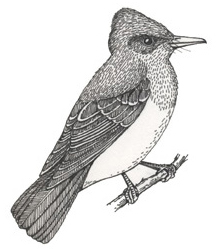
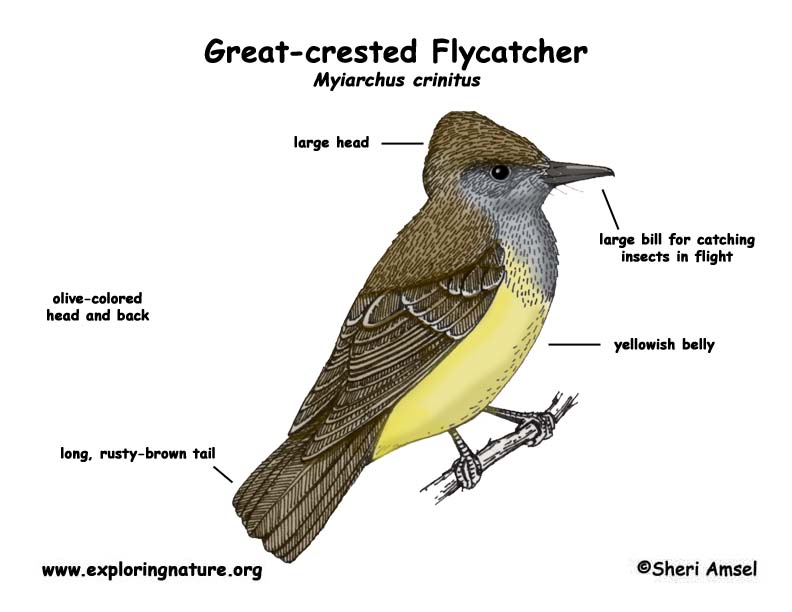
They have an olive-colored head and back, a yellowish belly and a long rusty-brown tail. They have a large head and bill made for catching insects.
Habits
They perch on a tree branch or wire and watch for insects. When they see one, they fly out and grab it right out of the air.
Diet
They eat insects.
Reproduction
They nest in tree holes and bird boxes. They make a large nest of grass and line it with anything they can find, like string, plastic and fabric bits. Females lay 5 or 6 white eggs with spots.
Classification
Kingdom: Animalia
Phylum: Chordata
Subphylum: Vetebrata
Class: Aves
Order: Piciformes
Family: Tyrannidae
Genus: Myiarchus
Species: M. crinitus