

Tyrannus forficatus
Range
They winter in very southern Florida, Mexico south to Panama. In the summer, they come north to the grasslands of the central U.S. in Texas, Oklahoma, Kansas, Louisiana, Arkansas and Missouri.
Habitat
They breed out in grasslands spotted with trees and shrubs.
Body Traits
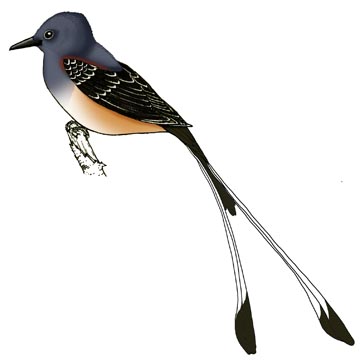
Overall they are a pale gray with darker wings, eyes and beak. Their most striking trait is their long, forked tail that brings this mid-sized bird to more than 14 inches long. They also have an orangey flank and small red patch on the shoulder.
Habits
Males do an impressive flight displays when courting females. They also chase off other birds that happen through their territory. Once the eggs hatch, the males will help feed the young.
Diet
They eat grasshoppers, crickets, dragonflies and other insects catching them in flight or snatching them off of plants. They tend to hunt from a perched position flying out to grab for prey flying by.
Reproduction
Females lay up to 6 white eggs with dark splotches in a nest made of grass and litter (string, scraps of cloth and plastic, etc.) They build their nests in trees or scrubs out in grassy areas.

Classification
Kingdom: Animalia
Phylum: Chordata
Subphylum: Vertebrata
Class: Aves
Order: Passeriformes
Family: Tyrannidae
Genus: Tyrannus
Species: Tyrannus forficatus