

Eudocimus albus
Range
They are found in the southeastern U.S., Mexico, Central America and the Caribbean.
Habitat
They live in marshes, coastal wetlands, wet forests and grasslands, cypress swamps and mangroves.
Body Traits
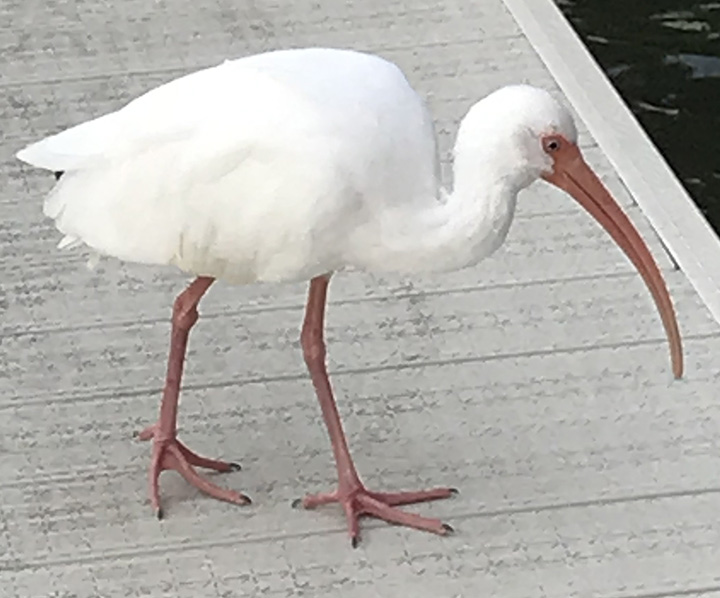
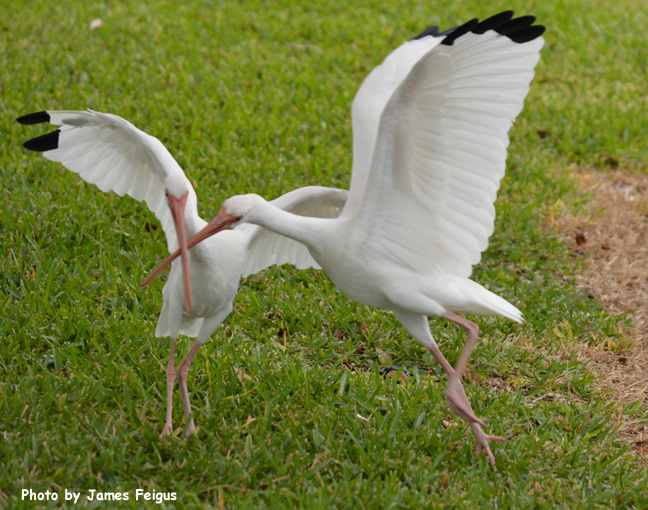
They are all white with long, red legs and black wing tips. They have a long, red, downward-curved beak with a brown tip. The face is featherless and bright pink with blue eyes.
Habits
They nest in colonies and feed in flocks, but will defend their nest from other ibis that approach too closely.
Diet
They eat insects, crayfish and other water crustaceans using their long beak to poke into the mud looking for prey. Once they snatch prey in their beak, they wash it in the water and tip up their heads to swallow it whole.
Reproduction
The female lays 2-3 eggs in a nest built in the trees over the water. They build them in colonies near other ibis. Both parents take turns warming the eggs (incubation) which take 3 weeks to hatch. Both also care for hatchlings, feeding them and keeping them shaded from the hot southern sun.

Classification
Kingdom: Animalia
Phylum: Chordata
Subphylum: Vertebrata
Class: Aves
Order: Ciconiiformes
Family: Threskiornithidae
Subfamily: Threshkiornithinae
Genus: Eudocimus
Species: E. albus