


Familiarize students with the plants in their diet by recognizing the parts of plants in the foods found in popular media (other than a plant diagram). When choosing food pictures, choose some simple pictures with piles of strawberries or an apple, but also choose more complex foods. A hamburger meal can provide an onion (root), lettuce (leaf), tomato (fruit), sesame seeds on bun (seeds) and even the bun itself is technically made from wheat, though they may not be able to name the part of the wheat used for making flour.
The discussion can also bring to light the difference between a structural “fruit” as part of the plant (where even a cucumber is a fruit), compared to a fruit as characterized in food groups for the general public. This also shows what a huge role plants play in our diets, even if we avoid broccoli.
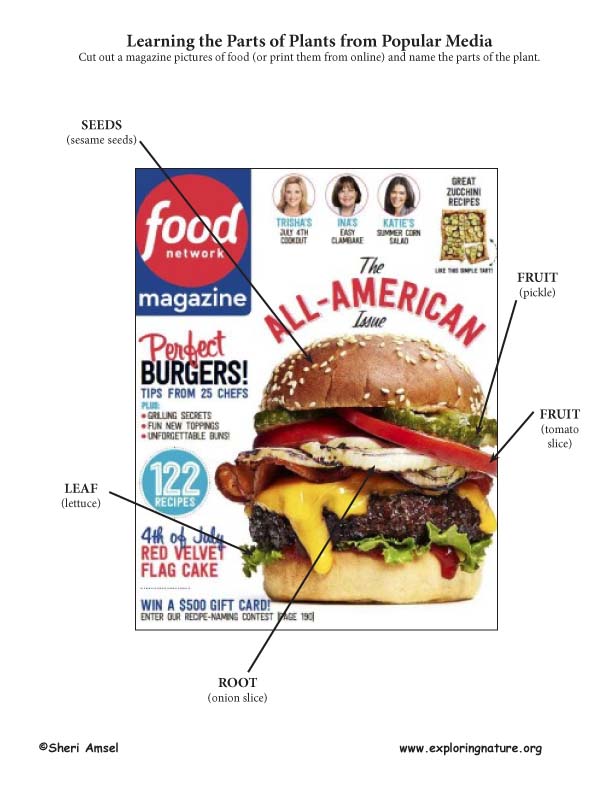
Age: 2nd-6th grade
Objectives: The student will be able to:
- Identify the parts of a plant.
- Recognize plants as part of their diet.
- Identify plant parts in every day foods.
Materials:
- Color photos of food items cut out of magazines.
- White paper on which to paste food items.
- Permanent marker to point to and number each food (plant) part to be identified.
- A numbered answer sheet, for students to write down the plant parts.
Procedure:
- Layout the different food pages around the room.
- Have students file by each and label the plant parts of the plants on their answer sheet.
- After everyone has completed naming all the plant parts go over the answers as a group.
As a treat, try the Plant Party Activity (cut vegetables and dip) as a follow up to reinforce their learning.