

Aptenodytes patagonicus
Range
They are found on the islands around Antarctica and as far north as Argentina and almost as far north as Australia and New Zealand.
Habitat
They can live in areas that are rocky, icy, or snowy. They just have to be near open water for hunting food.
Body Traits
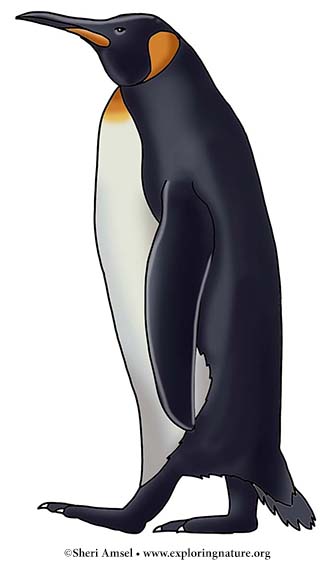
They are the second largest penguin, reaching more than 3 feet tall. They have a triangle-shaped tail that helps them steer while swimming. They have a yellow-orange patch on each side of their head, high on the their chest and along their dark beak.
Habits
They hunt in groups, diving deeply after prey. They are excellent swimmers, moving fast in the water. They use their feet and wings to power them through the water. They walk much more slowly on land, sometimes sliding on their bellies in the snow. They only feed every 2 weeks and lose a lot of body weight between feedings.
Diet
They eat fish and squid.
Reproduction
They breed in large colonies. Pairs “sing” to each other, which helps them tell each other from the many other identical penguins around them. The female lays one egg, which she and her mate keep warm (incubate) on top of their feet tucked under their belly for almost 2 months. They build no nest but stay very close together while caring for their egg.

Classification
Kingdom: Animalia
Phylum: Chordata
Subphylum: Vetebrata
Class: Aves
Order: Sphenisciformes
Family: Spheniscidae
Genus: Aptenodytes
Species: A. patagonicus