Understanding by Design (UbD)works backwards from traditional teaching methods, starting with the lessons’ goals and objectives (the “outcomes”) and planning curriculum to reach that goal.
Authentic performance activities help assess the students’ understanding of the topic as they explain and interpret their “job” using this knowledge. Imagine every science topic integrating an authentic performance to show students how this knowledge can be applied to every day life, potential future careers and world issues like medical health, conservation and public safety. At the same time, the educator, other students and the students themselves can assess their grasp of the concepts.
Focus Questions:
1. Why do we learn about genetics and selective breeding?
2. Can you think of any other jobs where knowing about genetics might be helpful?
3. Can you think of any ways where knowing about genetics and selective breeding could affect your home and property (pets and landscaping)?
Authentic Performance
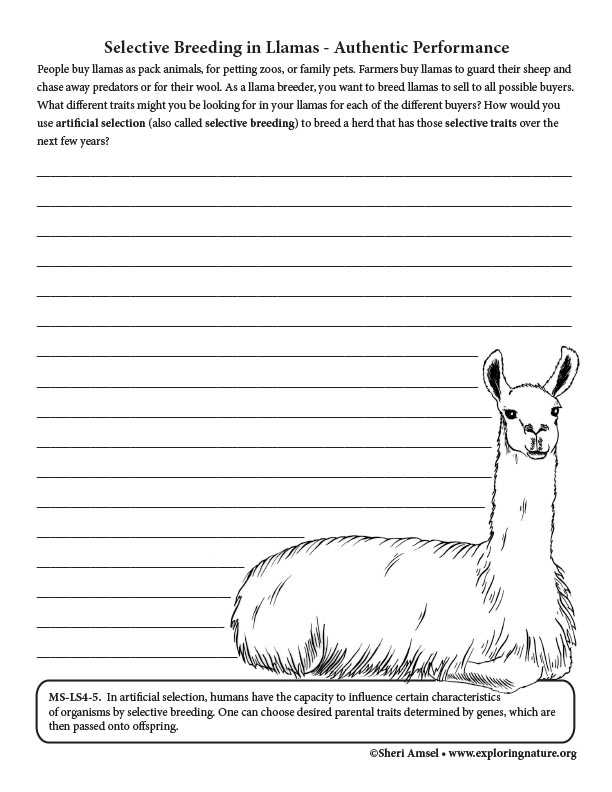
People buy llamas as pack animals, for petting zoos, or family pets. Farmers buy llamas to guard their sheep and chase away predators or for their wool. As a llama breeder, you want to breed llamas to sell to all possible buyers.
What different traits might you be looking for in your llamas for each of the different buyers? How would you use artificial selection (also called selective breeding) to breed a herd that has those selective traits over the next few years?