

Sterna paradisaea
Range
They breed in summer all over the Arctic in northern Eurasia, Iceland, Greenland, Alaska and northern Canada, southward to northern British Columbia and sometimes the eastern U.S. south to Massachusetts. This is called circumpolar. They winter on the pack ice off the coasts of Antarctica.
Habitat
They breed on the tundra, on rocky islands and beaches.
Body Traits
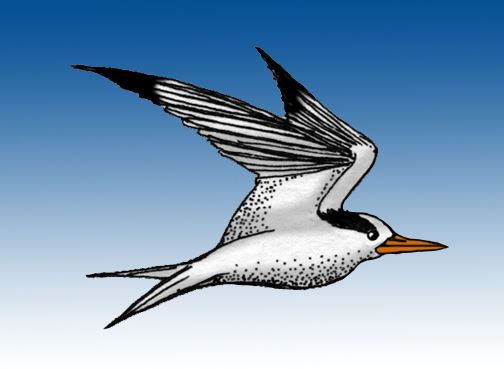
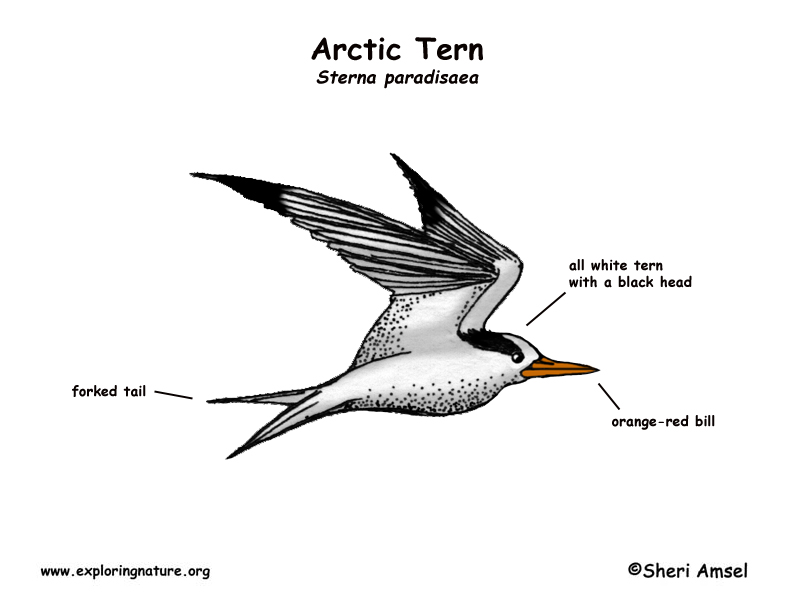
They are white with a black head and an orange-red bill. They are a small bird with short legs. They only reach about a foot and a half long and weigh about 2 pounds. When flying, you can see black markings under their wings. They have a forked tail.
Habits
They live in big groups (colonies) of 50 or more that sometimes have gulls and other terns in them. They can hover in midair like a hummingbird. They travel the furthest of any bird in the world every year, covering 22,000 miles (migration). They spend most of their lives in the air.
Diet
They eat fish, insects, shrimp, and other small sea creatures.
Reproduction
Females dig a nest on the rocky ground or grass, hidden in the taller grass or sometimes right out in the open. Females lay 1-3 greenish eggs with dark spots.
Classification
Kingdom: Animalia
Phylum: Chordata
Subphylum: Vertebrata
Class: Aves
Order: Charadriiformes
Family: Laridae
Genus: Sterna
Species: S. paradisaea