

Pan troglodytes
Range
Chimpanzees are found in Western and Central Africa.Habitat
Chimpanzees are found in the rainforest and some grasslands (savanna).Body Traits
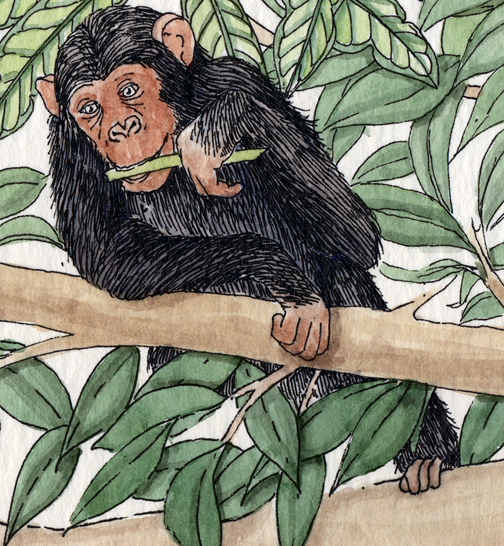
They are covered with dark hair all over their bodies, except on their faces, palms, fingers and the soles of their feet. They can grow to 5 feet tall. Their arms hang below their knees. They don’t usually walk upright, but they can. They can weigh as much as 130 pounds.Habits
They use many calls to communicate. They live in troops of more than 50 chimps with one lead male (dominant). They are thought to be the closest relative to humans in the animal kingdom. Chimpanzees are very intelligent. They use tools. Very few mammals, besides for humans, can use tools. They use twigs to fish termites and ants out of their nests and rocks to crack seeds, etc.Diet
Chimpanzees eat meat and plants (omnivores). They feed on leaves, fruit, insects and small animals, like baby monkeys.Predators
Predators that eat them (mostly the very young) are baboons, leopards, large snakes and man.Reproduction
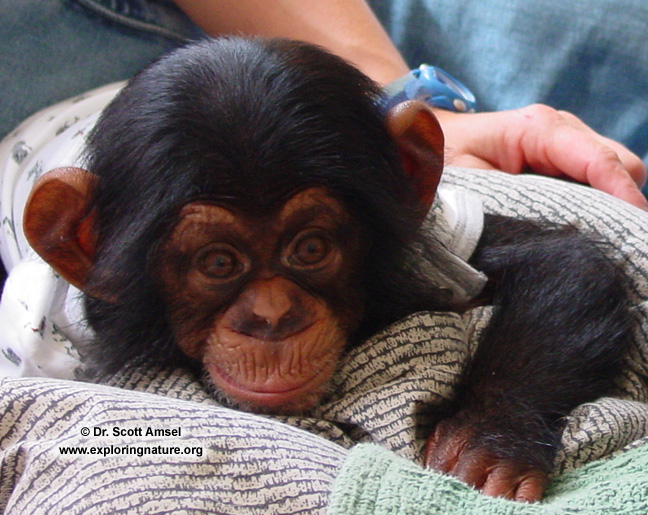
Females are 13 years old before they have their first baby. They are pregnant for 8 months (gestation). They have 1 baby.Lifespan and/or Conservation Status
Chimpanzees can live more than 50 years. They are considered very endangered. They are listed as endangered from both illegal hunting and habitat loss.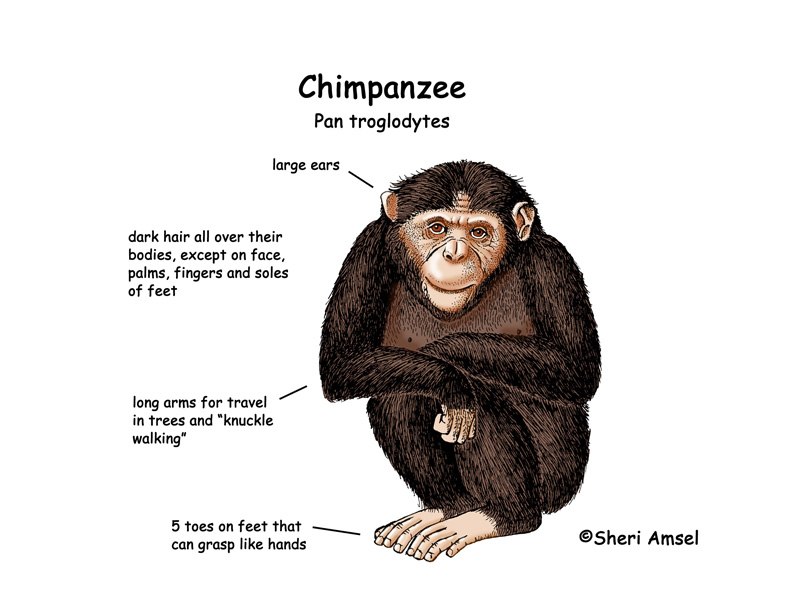
Classification
- Kingdom: Animalia
- Phylum: Chordata
- Subphylum: Vertebrata
- Class: Mammalia
- Order: Primates
- Suborder: Haplorrhini
- Family: Hominidae
- Genus: Pan
- Species: Pan troglodytes