

Tamias striatus
Range
Eastern chipmunks are found in Southeastern Canada and the Northeastern U.S. south to Virginia and west to the east side of the Rocky Mountains.Habitat
They live in open deciduous forests (trees with leaves that fall each autumn). They also live in brushy areas, rock piles and around people’s homes.Body Traits
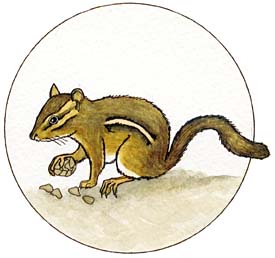
Chipmunks have reddish-brown backs and white bellies. They have white stripes bordered by black stripes that run down their sides. They have white stripes above and below their eyes. They run with their tail’s up. They weigh about 3 ounces.Habits
They live in burrows in the ground. Their burrows can be 25 feet long, with two exits and many chambers. They den up and sleep for most of the winter. But they are not true hibernators. They wake up and feed on stored food.Diet
They eat seeds, fruits, nuts, and insects.Predators
Predators that hunt them include owls, hawks, foxes, bobcats, raccoons, weasels, and pet dogs and cats.Reproduction
Females are pregnant for 1 month (gestation). They have 4-5 young. They have 2 litters per year.Lifespan and/or Conservation Status
They live up to 10-15 years in the wild. They are not threatened.
Classification
- Kingdom: Animalia
- Phylum: Chordata
- Subphylum: Vertebrata
- Class: Mammalia
- Order: Rodentia
- Suborder: Sciuromorpha
- Family: Sciuridae
- Subfamily: Xerinae
- Genus: Tamias
- Species: Tamias striatus