

Loxodonta africana
Range
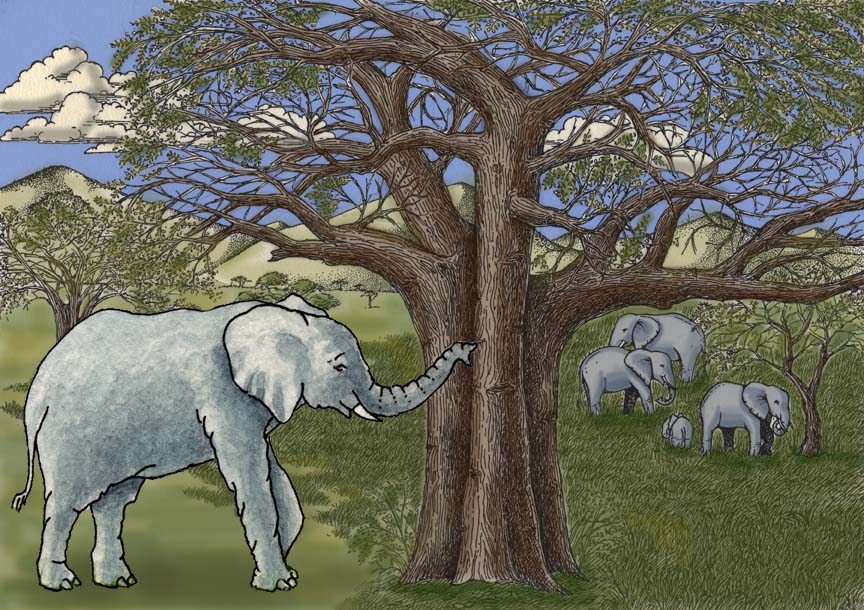
African elephants once ranged all over Africa south of the Sahara desert. Now they are limited to parks and preserves, where they are protected.
Habitat
They live in the forest, scrublands and grasslands (savanna).
Body Traits
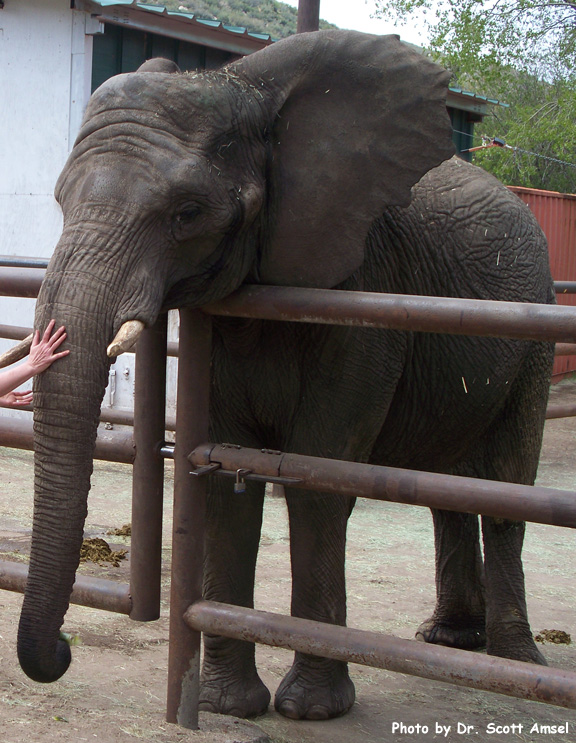
Male African elephants are the largest land animals on earth at up to 25 feet long and weighing as much as 14,000 pounds (7 tons). Females are smaller. Both males and females have tusks. African elephants have large fan-like ears.
Habits
Female elephants live together in small family groups for their whole lives. Young males will stay with the females until they are old enough to mate. Then they leave and go out on their own.
Diet
Elephants eat for up to 16 hours a day. They can eat 1000 pounds of plants a day. Elephants can destroy a lot of trees as they feed. They also need up to 50 gallons of water a day.
Predators
They have no natural predator as adults, though babies can fall prey to lions, hyenas or crocodiles.
Reproduction
Females are pregnant for 22 months (gestation). They have 1 baby who weighs up to 250 pounds at birth!
Lifespan and/or Conservation Status
They can live up to 70 years and only die then because their teeth wear out and they can no longer feed themselves. They are listed as vulnerable.

Classification
Kingdom: Animalia
Phylum: Chordata
Subphylum: Vertebrata
Class: Mammalia
Order: Proboscidea
Family: Elephantidae
Genus: Loxodonta
Species: Loxodonta africana