

Leontopithecus rosalia
Range
Golden lion tamarins can only be found in three small areas of the rainforests in coastal, southeastern Brazil.Habitat
Golden lion tamarins live in rain forest. There may only be 400 left in the wild.Body Traits
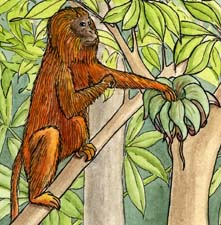
The golden lion tamarin is a very small monkey. They are no more than 2.5 feet long including their tail and up to 2 pounds. They are about the size of a squirrel. They have golden, reddish fur that frills around their bare faces like a lion’s mane. They have claws instead of fingernails that they use to dig into trees looking for insects to eat.Habits
They live in small family groups and are active during the day (diurnal). At night they sleep in tree cavities.Diet
They eat insects, fruit, small reptiles and some plants matter (omnivores).Predators
Predators include raptors, cats, and large snakes.Reproduction
Females are pregnant for about 130 days (gestation) when they have 1 – 2 young. Tamarins stay with 1 mate (monogamous) and both take care of the young. They live in small family groups of up to 2-8 tamarins. When babies are 3-4 weeks old they begin to be cared for by their father or siblings.Lifespan and/or Conservation Status
They live about 15 years in the wild. They are critically endangered and considered one of the rarest mammals in the world.
Classification
- Kingdom: Animalia
- Phylum: Chordata
- Subphylum: Vertebrata
- Class: Mammalia
- Order: Primates
- Suborder: Haplorrhini
- Family: Cebidae
- Subfamily: Callitrichinae
- Genus: Leontopithecus
- Species: Leontopithecus rosalia