

Saimiri sciureus
Range
Squirrel monkeys live in rainforests from Costa Rica to Panama and down through central South America.Habitat
They spend their time high up in rain forest trees, only rarely coming down to the forest floor for food. They are often found near farms and wet areas, like rivers and streams.Body Traits
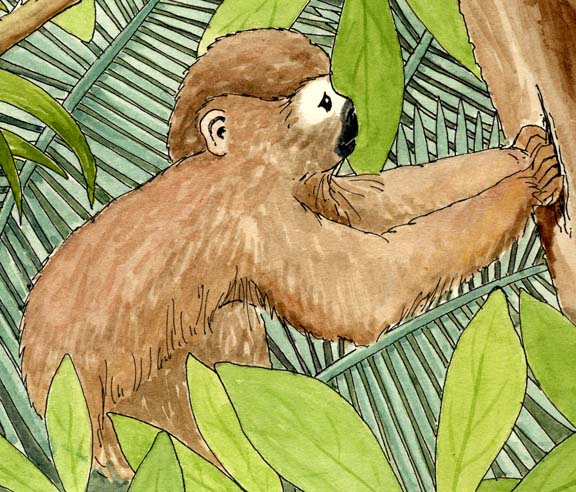
Squirrel monkeys can be up to 30 inches long including their tail, but usually average about 18 inches in length and rarely weigh more than 3 pounds. Males are larger than females. Squirrel monkeys have little white faces with black heads and a black nose and mouth (muzzle). Their fur can be from orange to green in color.Habits
They are active during the day (diurnal). They often live in groups of 30 or 40, mostly females with some males. Sometimes groups can number up to 100.Diet
They eat mostly insects, but also ripe fruit.Predators
Predators include snakes, falcons and wild cats.Reproduction
Some, but not all the females in the group have a baby each year, delivering at about the same time. They are pregnant for 5.5 months (gestation). All the females help the mothers. Males do not help raise the young.Lifespan and/or Conservation Status
They can live for 20 years in the wild.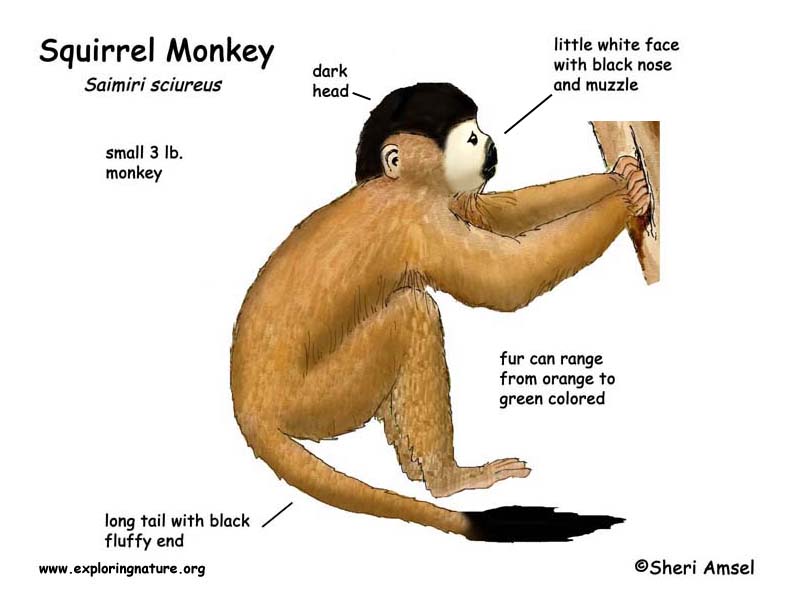
Classification
- Kingdom: Animalia
- Phylum: Chordata
- Subphylum: Vertebrata
- Class: Mammalia
- Order: Primates
- Suborder: Haplorrhini
- Family: Cebidae
- Subfamily: Saimiriinae
- Genus: Saimiri
- Species: Saimiri sciureus