

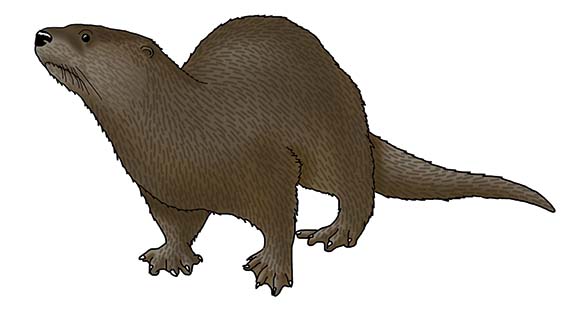
Lutra canadensis
Range
River otters were once common throughout Canada and most of the United States, except in desert areas. They are gone from much of the Midwest now, though some states are trying to re-introduce them.Habitat
They are rare in the rest of their habitat, which includes fresh and coastal waterways, swamps, lakes and marshes.Body Traits
They can reach over 4-feet long and weigh from 10 – 30 pounds. They are built for life in the water with a long, sleek body, webbed feet and dense, oily fur that protects them from the cold. They are excellent swimmers and can stay under water for many minutes. They have nostrils that can close when under water and long whiskers for detecting prey.Habits
They live in dens often with underwater doorways. They live alone, except when mating or females with young. They are playful, often sliding into the water down mud or snow banks.Diet
They must eat a lot to stay warm and energetic. They eat fish, frogs, turtles, crayfish, crabs, birds, eggs, and small mammals, usually hunting at night.Predators
Their main predator is man.Reproduction
They breed just once a year. Females are pregnant for 2 months (gestation) and have 1 – 6 babies at any time of year, but mostly in the early spring.Lifespan and/or Conservation Status
River otters can live up to 10 years in the wild. They are rare in much of their range. They are listed as Lower Risk – least concern.
Classification
- Kingdom: Animalia
- Phylum: Chordata
- Subphylum: Vertebrata
- Class: Mammalia
- Order: Carnivora
- Suborder: Caniformia
- Family: Mustelidae
- Subfamily: Lutrinae
- Genus: Lontra
- Species: Lontra canadensis