

Sciurus carolinensis

Range
The Eastern gray squirrel is found in eastern Canada and U.S. and down through the Midwest into Iowa, Kansas and Texas. It has been introduced to habitats on the west coast too.Habitat
Eastern gray squirrels are found in hardwood and mixed forests as long as there are trees that produce nuts. They especially seem to like oak and hickory nuts.Body Traits
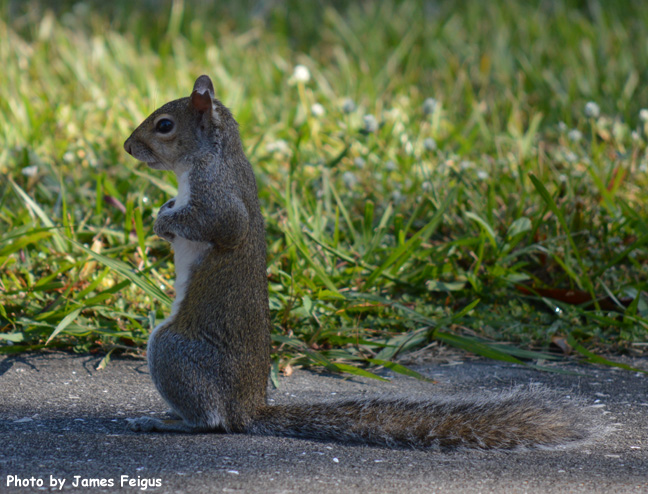
They are gray with lighter fur on their bellies. They have a flurry tail with silver tipped hairs. There is also a black phase of this squirrel in the northern part of its range. They are about 9 inches tall and weigh about 2.5 pounds.Habits
Eastern gray squirrels are active in the daytime (diurnal), especially in the morning and evening. They are active all year. Gray Squirrels den in trees cavities in the winter and leaf nests in the summer.Diet
They eat nuts: hickory, beech, acorns, and walnuts. They bury nuts they collect, so act as tree planters.Predators
Predators include coyotes, foxes, bobcats, hawks, owls, weasels, raccoons, and snakes.Reproduction
Females are pregnant for 6 weeks (gestation) and have 2-3 young born in the spring. They may have a second litter late in the summer.Lifespan and/or Conservation Status
They can live between 4-7 years in the wild. They are listed as Lower Risk – least concern.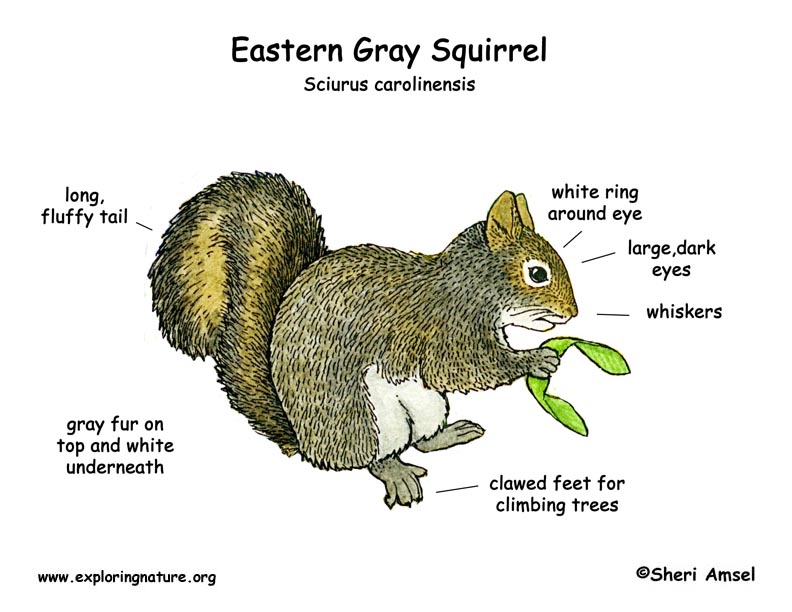
Classification
- Kingdom: Animalia
- Phylum: Chordata
- Subphylum: Vertebrata
- Class: Mammalia
- Order: Rodentia
- Suborder: Sciuromorpha
- Family: Sciuridae
- Subfamily: Sciurinae
- Genus: Sciurus
- Species: Sciurus carolinensis