

Ochotona princeps
Range
They are found in the mountains of North America, Europe and Asia.Habitat
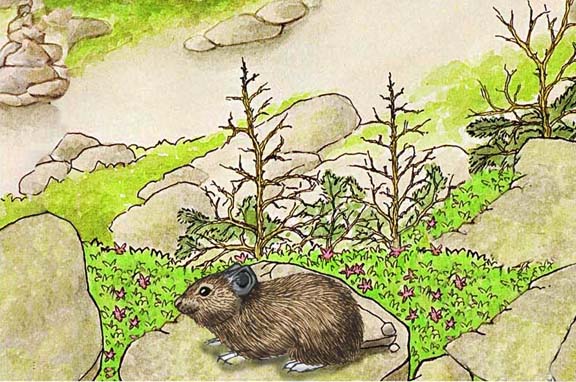
They live in rocky places in cold, mountainous areas.Body Traits
They are small (less than a pound) with little, round bodies, little, round ears and no tail. They are covered with a warm, brown fur. They are in the same family as the rabbit, so they have 6 front snipping teeth (incisors) for cutting grass and plants (4 on top and 2 on bottom).Habits
They are active during the day (diurnal) finding food in and around the rocks. They have a shrill, whistling call. They live in small groups (colonies) with family members who call back and forth to each other to warn each other of danger and mark their territories.Diet
They eat plants (herbivores) like grass, leaves and twigs.Predators
Predators that eat them are hawks, eagles, weasels, fox and martens.Reproduction
Females nest in a rocky crevice. They are pregnant for about 1 month (gestation) and have 1 – 6 babies.Lifespan and/or Conservation Status
They may live up to 7 years in the wild. They are listed as Lower Risk – least concern.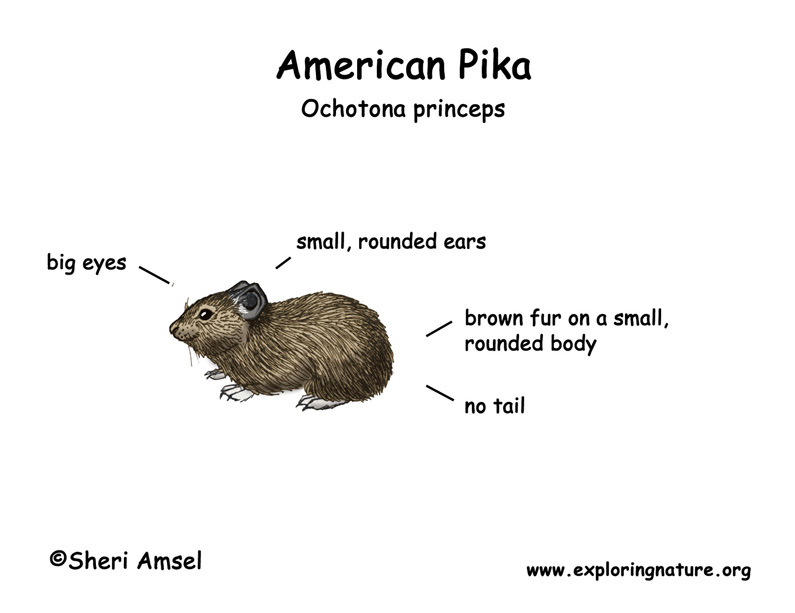
Classification
- Kingdom: Animalia
- Phylum: Chordata
- Subphylum: Vertebrata
- Class: Mammalia
- Order: Lagomorpha
- Family: Ochotonidae
- Genus: Ochotona
- Species: Ochotona princeps