

Mephitis mephitis
Range
The striped skunk occurs from Canada south throughout the United States.Habitat
The skunk can be found in many habitats including; forests, grasslands, desert, and developed communities.Body Traits
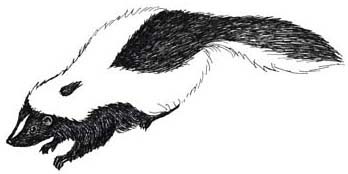
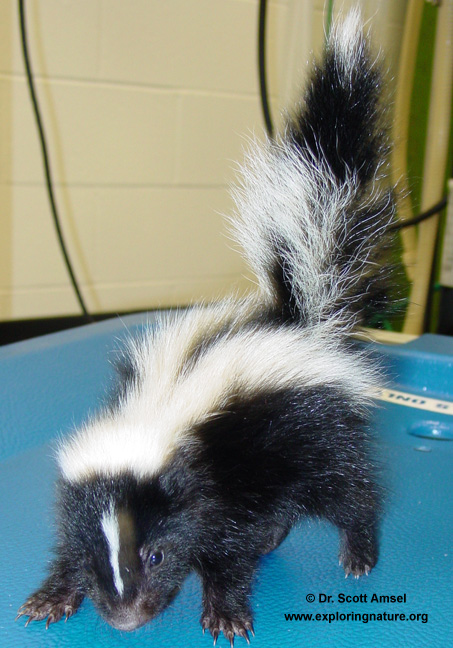
Skunks have a small, black head with a white stripe between their eyes. Two white stripes run down the sides of its black back out onto its bushy tail. They are about 2.5 feet long and can weigh up to 15 pounds. Females are smaller. Skunks have glands underneath their tails (anal glands) from which they can spray a toxic musk at predators. This spray is so strong that it can cause pain and temporary blindness if it gets in the eyes. It also sticks to whatever it hits and the strong smell can linger on its target for months. The striped skunk is the main carrier of rabies in the U.S.Habits
The skunk is active at night (nocturnal).Diet
The skunk is an omnivore, eating plants, insects, small animals, and eggs.Predators
Its chief predator is the great horned owl.Reproduction
Females are pregnant for just over 2 months (gestation). They have 4-7 young in mid-May. They do not hibernate, but during extremely cold winters may not move at all (dormant) until the cold snap passes.Lifespan and/or Conservation Status
They can live 2-3 years in the wild.
Classification
- Kingdom: Animalia
- Phylum: Chordata
- Subphylum: Vertebrata
- Class: Mammalia
- Order: Carnivora
- Suborder: Caniformia
- Family: Mephitidae
- Genus: Mephitis
- Species: M. mephitis