

Leptonychotes weddellii
Range
They are found in the ocean around the Antarctic and nearby islands. They don’t migrate. They live the furthest south of any seal or sea lion.Habitat
They live on the ice around Antarctica and the nearby islands. They stay where there are natural ice cracks where they can chew breathing holes, using their sharp canine teeth.Body Traits
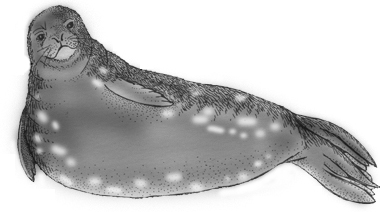
They have a large body and a small head. They are dark grayish- brown with spots. Their front flippers are small for their body size. They can reach 9.5 feet long and weigh up to 1,300 pounds.Habits
They do most everything underwater, from eating to mating. They can dive to more than 1,500 feet.Diet
They eat fish, squid and krill.Predators
They are hunted by killer whales and leopard seals.Reproduction
Females are pregnant for more than 1.5 months before they start to develop. This is called delayed implantation. Once it begins to grow, it is another 10 months before it is born (gestation). They have their baby (pup) on the ice.Lifespan and/or Conservation Status
They can live up to 30 years. They are listed as Lower Risk – least concern.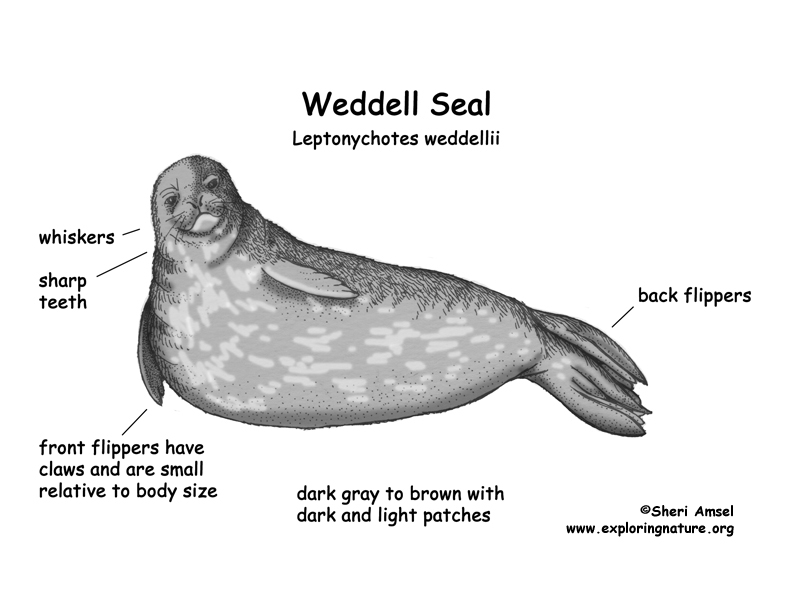
Classification
- Kingdom: Animalia
- Phylum: Chordata
- Subphylum: Vertebrata
- Class: Mammalia
- Order: Carnivora
- Suborder: Caniformia
- Family: Phocidae
- Genus: Leptonychotes
- Species: Leptonychotes weddellii