

Daubentonia madagascariensis
Range
They are found on the island of Madagascar.Habitat
They live in forests.Body Traits
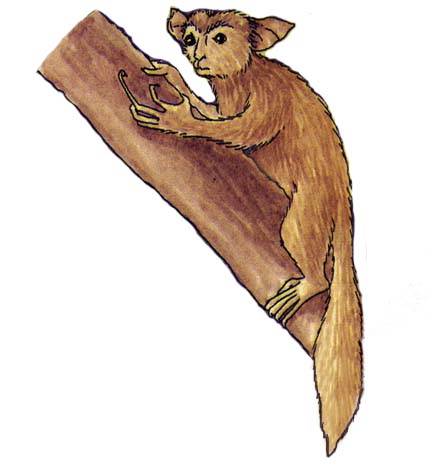
They are brown with grizzled hair around their neck, a long, furry tail and big ears. They weigh in at about 5 pounds (2.5 kg) and can reach almost 3 feet long (90cm) including tail. They have a very long middle finger that they use to tap trees. The sound will disturb insect larvae inside the bark of the trees. They listen for the sound of the larvae moving around. If they hear it, they dig with sharp teeth into the tree and pull it out with their long finger and eat it. They have very sensitive hearing for this job.Habits
They live alone except to mate and are active at night (nocturnal). During the day they make a nest in the fork of a tree, high off the ground where they sleep.Diet
They eat insects, fruit, seeds and mushrooms.Predators
They are often killed by superstitious people, who think they are bad luck. Some people think that if you see an aye aye, it means someone will soon die. Because of this aye aye are killed whenever they are seen, though they are quite harmless. Researchers say they are curious and act a bit like the North American raccoon when searching for food in and around a village.Reproduction
They are pregnant for 5. 5 months (gestation) and have one baby.Lifespan and/or Conservation Status
They can live more than 20 years in captivity, but much less in the wild. They are listed as endangered.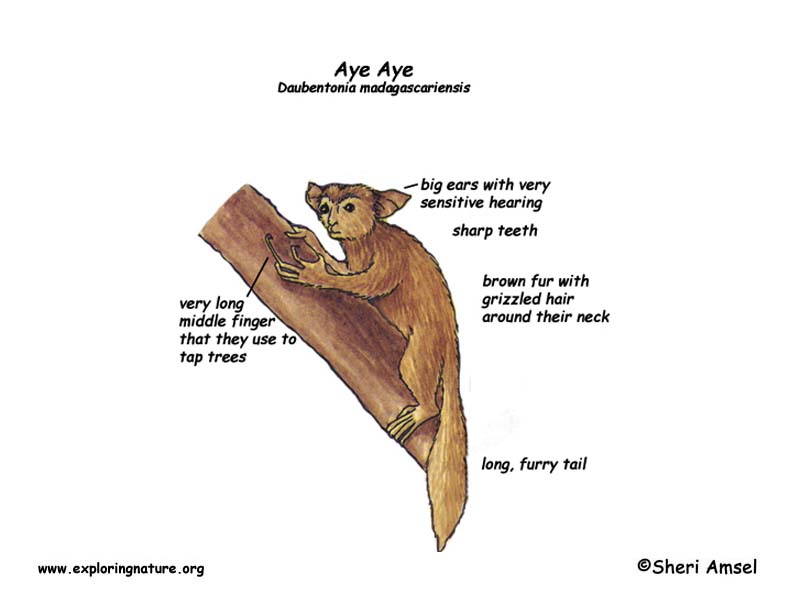
Classification
- Kingdom: Animalia
- Phylum: Chordata
- Subphylum: Vertebrata
- Class: Mammalia
- Order: Primates
- Suborder: Strepsirrhini
- Family: Daubentoniidae
- Genus: Daubentonia
- Species: Daubentonia madagascariensis