

Indri indri
Range
They are found on the island of Madagascar in the eastern forests.Habitat
They live in wet forests, up in the trees.Body Traits
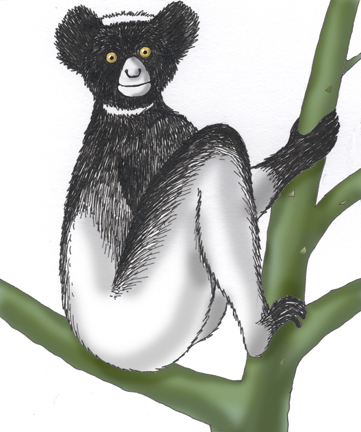
They have black and white fur and a black face with ear tufts. They are the largest of the lemurs and can weigh up to 20 pounds (10 kg). They can be more than 2 feet long including their short, stubby tail. They have a special throat sac for making calls.Habits
They have a loud, eerie call and an alarm “bark.” They are active during the day (diurnal) living almost entirely up in the trees (arboreal) leaping from tree to tree. They are often seen in pairs.Diet
They eat fruits, leaves and seeds.Predators
They are endangered. They are killed by snakes eagles, fossa and man.Reproduction
They are pregnant for about 5 months (gestation) and have 1 baby. They only give birth about once every 3 years.Lifespan and/or Conservation Status
Unknown lifespan in the wild, but in captivity, they can live up to 40 years. They are listed as endangered.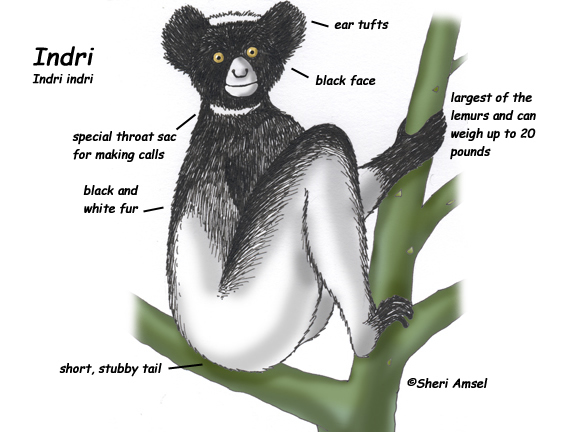
Classification
- Kingdom: Animalia
- Phylum: Chordata
- Subphylum: Vertebrata
- Class: Mammalia
- Order: Primates
- Suborder: Strepsirrhini
- Family: Indriidae
- Genus: Indri
- Species: Indri indri