

Spilogale gracilis

Range
They are found in the western U.S.Habitat
They live in rocky scrublands, but have become used to people and can be found under porches and in attics.Body Traits
The males reach 1.5 feet long with tail, while females are smaller. They are much smaller than striped skunks weighing less than 1.5 pounds. Their front feet have long sharp claws for digging. They are black with white spotting on their forehead and the side of the face with white stripes down the shoulders from the back of the head. They have two more stripes from the back of the head down the middle of the back and two that run diagonal across each hip with a few white spots on the rear end. The tail is white underneath and at the tip. They have scent glands under tail for spraying noxious oil.Habits
They are nocturnal, good climbers and diggers. They will raise their tail and spray their noxious, burning poison on a predator.Diet
They eat eggs, fruit, small rodents, insects and even scorpions.Predators
They are killed by bobcats, owls, and humans.Reproduction
They mate in the fall, but females don’t get pregnant until late winter (delayed implantation). True pregnancy (gestation) is less than a month. Females have up to 5 kits in spring (April-May). She cares for them through the summer. They follow her around while she forages for food.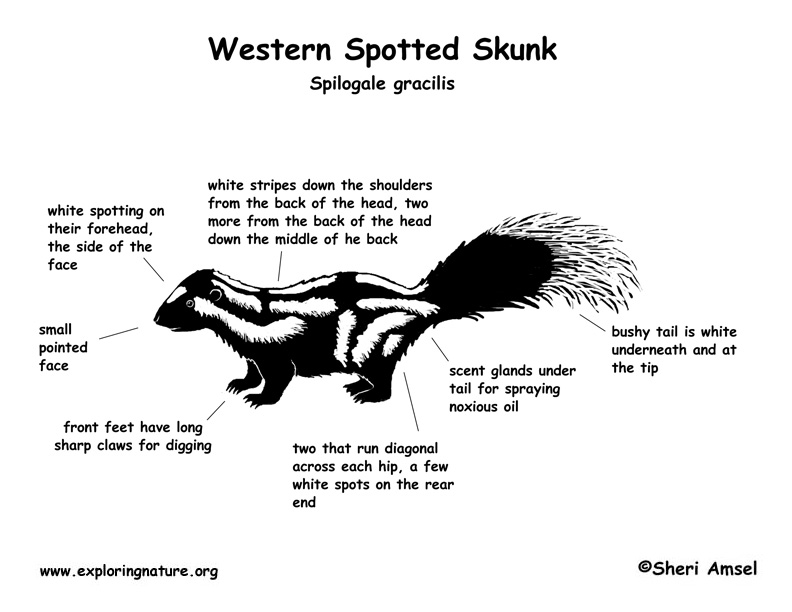
Classification
- Kingdom: Animalia
- Phylum: Chordata
- Class: Mammalia
- Order: Carnivora
- Family: Mephitidae
- Genus: Spilogale
- Species: S. gracilis