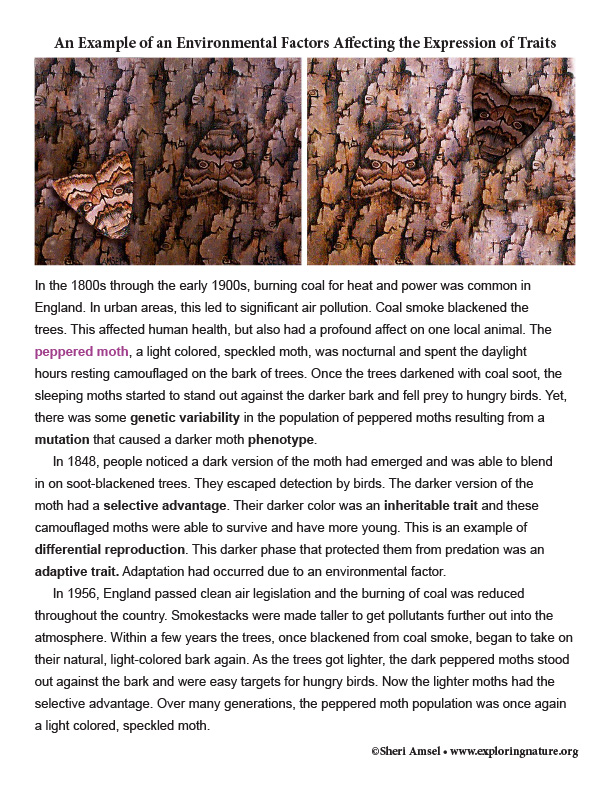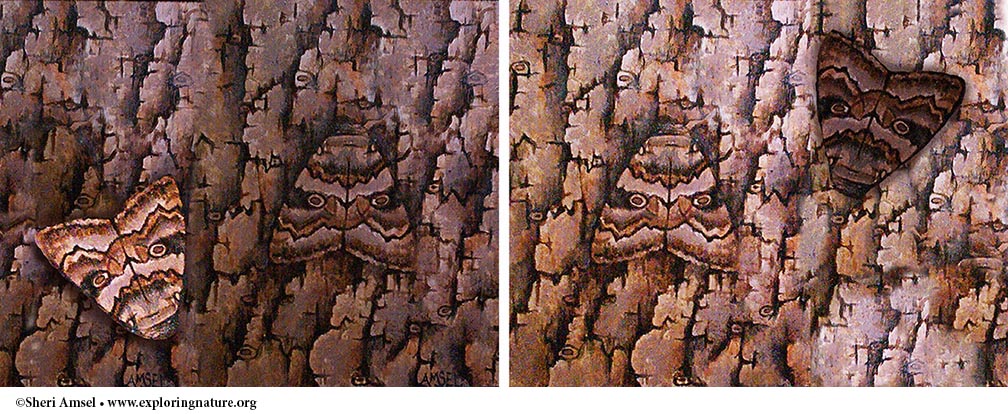
In a population of organisms there is always some genetic variability. If some individuals have one or more expressed traits that help them survive to have more offspring, they are said to have adaptive traits that may give them a selective advantage. This is an example of natural selection that can lead to a trait being expressed in more and more of the population over time and how adaptation occurs.
Adaptive traits can improve an animal’s ability to find food, make a safer home, escape or evade predators, survive cold, heat, or lack of water. Sometimes the trait is obvious, like a skunk’s toxic spray or a porcupine’s quills, but sometimes an adaptive trait can be more subtle like the silent feathers of a hunting owl.
There are three things that make natural selection work:
1) Genetic variability in a population, so that a trait that can give an advantage is expressed.
2) The expressed trait must be inheritable so it can be passed on to offspring.
3) The trait must lead to more offspring surviving. This is called differential reproduction.
Read about the peppered moth and how environmental factors affected the expression of traits in its population over time. Answer some questions about this anecdote.
1) What genetic and environmental factors were involved in the change of the peppered moth’s coloring during the 1800s?
2) What made their color change back?
3) After understanding what was involved in the peppered moths turning darker, could you have predicted the probability of their color turning lighter again when the environmental factors changed?
4) Can you think of other examples of the variation and distribution of traits being affected by both genetic and environmental factors?