

Mungos mungo
Range
They are found in Sub-Saharan Africa.Habitat
They live in moist habitats including scrublands, woodlands, grasslands, and along river habitats.Body Traits
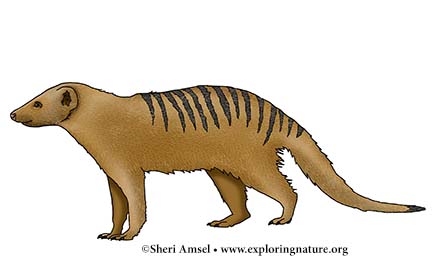
They have light-colored fur with black bands that run down their sides from the middle of the back to the base of the tail. They have long claws on 5 front digits and 4 back digits, which they used for digging. They have a pointed snout with a small, furless nose and a long, pointed tail with a black tip. The whole body length is less than 2 feet long (600mm).Habits
They are active during the day (diurnal). They live in packs with more than a dozen other adults. When threatened they emit a high pitched chittering call. They will rise on their back feet to scan for danger. They move den locations every couple of weeks.Diet
They eat mostly insects and invertebrates, but will take snakes, lizards, and eggs.Reproduction
Females are pregnant for about 2 months (gestation). They have 2-6 young in underground dens that may be shared by many females. The females will birth around the same time and share the duties of raising young. They can start leaving the den to hunt at about a month old.Lifespan and/or Conservation Status
They live about 11 years. They are not endangered.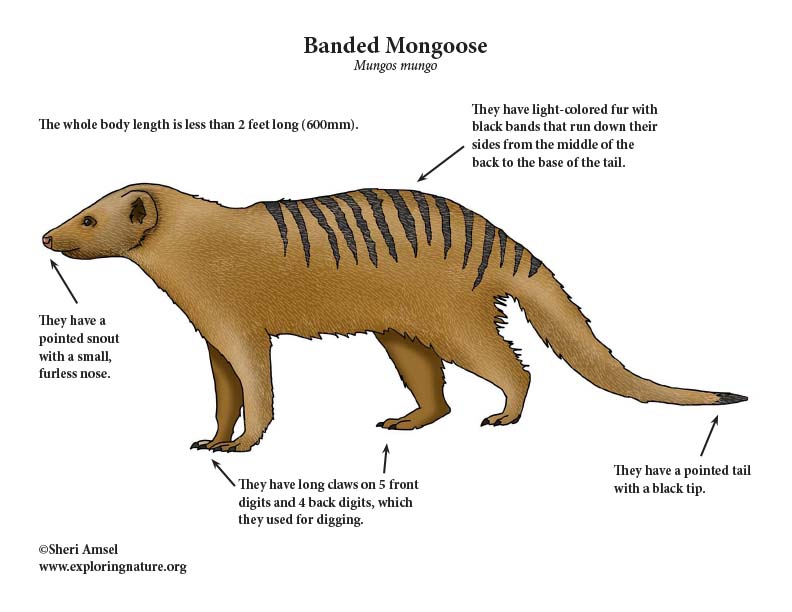
Classification
- Kingdom: Animalia
- Phylum: Chordata
- Subphylum: Vertebrata
- Class: Mammalia
- Order: Carnivora
- Suborder: Feliformia
- Family: Herpestidae
- Genus: Mungos
- Species: Mungos mungo