

Elephas maximus
Range
Asian Elephants are found in India, Malaysia, Sumatra, and Indonesia.
Habitat
They live in tropical and near tropical (subtropical) forests, grassy areas and marshes.
Body Traits
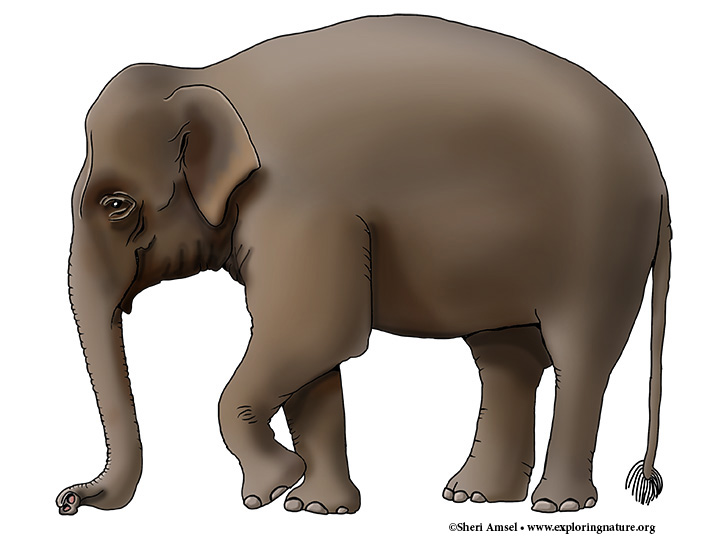
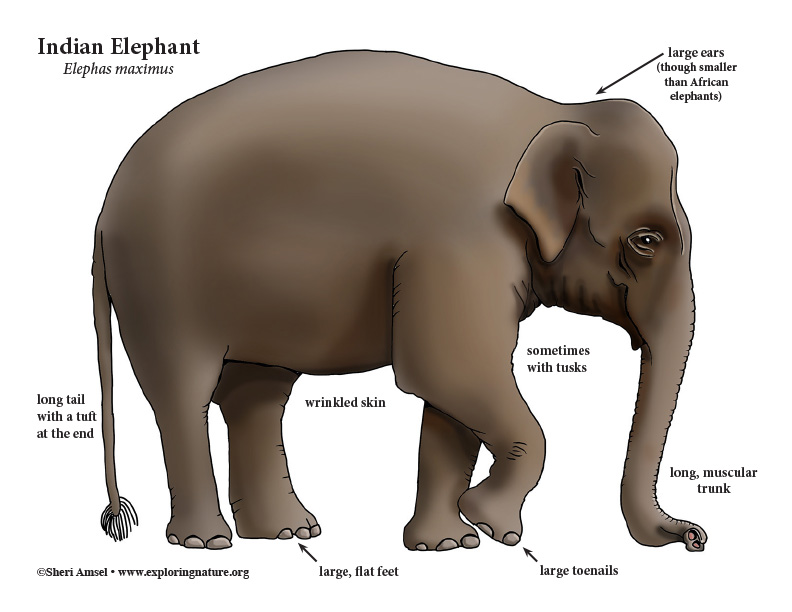
They are smaller than the African elephant with smaller ears, but are the largest land mammal in Asia. They can reach 24 feet long and weighing as much as 11,000 pounds (5.5 tons). Females are smaller. Both males and females have tusks, but the females’ are so small they rarely show. Not all males have tusks. They are gray with patched of pink on their head, ears and chest.
Habits
They fan their ears to give off body heat and cool themselves. They are good swimmers. Female elephants live together in small family groups for their whole lives. Young males will stay with the females until they are old enough to mate. Then they leave and go out on their own. Asian elephants can be tamed by people and are used for many tasks.
Diet
They eat all plants (herbivores), like grass, leaves, twigs and shrubs.
Predators
They have no natural predator as adults, though as babies they can be eaten by tigers.
Reproduction
Females can have young every 4-6 years and rarely have more than seven babies in all. They are pregnant for 22 months (gestation). They have 1 baby.
Lifespan and/or Conservation Status
They live from 60 – 70 years. They are listed as endangered in the wild.
Classification
Kingdom: Animalia
Phylum: Chordata
Subphylum: Vertebrata
Class: Mammalia
Order: Proboscidea
Family: Elephantidae
Genus: Elephas
Species: Elephas maximus