


Organisms are made up of proteins that are, in turn, made up of amino acids. The amino acids needed for protein synthesis by each organism is encoded in their DNA. Using the processes of transcription and translation, you can, theoretically start with a strand of DNA and calculate the amino acid chains for which an organism is coded.
In this activity, students will be given three strands of DNA. Using the different resources provided, they will determine the amino acids for which the DNA is coding and the organisms that would result from their protein synthesis.
Resources Needed:
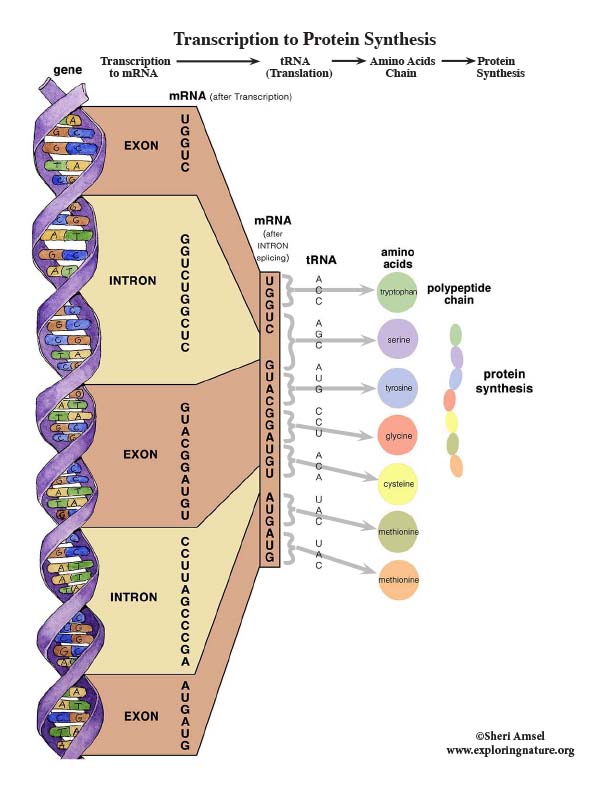
1. Transcription to Protein Synthesis sheet
2. Genetic Code chart
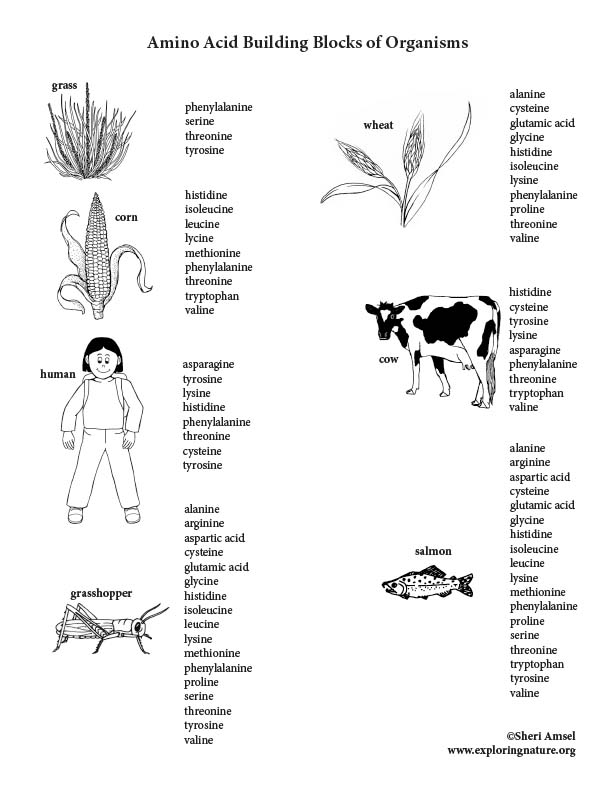
3. Amino Acid Building Blocks of Organisms chart
Procedure:
1. Examine the three strands of DNA provided.
2. Transcription: On the worksheet, make the DNA strand into mRNA codons by writing the complimentary bases (review Transcription to Protein Synthesis sheet).
3. Translation: On the worksheet, using the Genetic Code chart, fill in the amino acids for each DNA strand.
4. Organisms: Using the to Amino Acid Building Blocks of Organisms chart, find which three organisms you have decoded.
5. In the last step, can you speculate what these three organisms represent?
Important Tip: Students should not use the tRNA anticodon when using the chart. It is the mRNA codon that carries the codon for a specific amino acid. The tRNA “anticodon” is the complement of the mRNA codon. It’s job is to make sure to find the correct amino acid coded by mRNA to form the growing protein chain.


Fulfillment of Next Generation Science Standards (NGSS)
Next Generation Science Standards:
Disciplinary Core Ideas
LS1.A: Structure and Functions
• All cells contain genetic information in the form of DNA molecules. Genes are regions in the DNA that contain the instructions that code for the formation of proteins.
Performance Expectations – Students who demonstrate understanding can:
HS-LS3-1. Ask questions to clarify relationships about the role of DNA and chromosomes in coding the instructions for characteristic traits passed from parents to offspring.