

Pteropus poliocephalus
Range
They live in Australia and Southeast Asia.
Habitat
They are found in dense forests, rainforests and swampy areas.
Body Traits
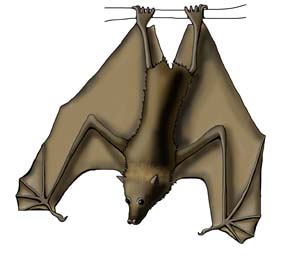
This is the largest bat in Australia, weighing up to 2 pounds and with the body and head reaching almost a foot long (29 cm). They have pointed dog-like faces – which is why they are called “flying foxes.” They have a grayish-brown body, reddish neck and light gray head. Their fur reaches all the way down their legs to the ankles and they have no tail. They have big ears for listening because they do not have echolocation for night flight.
Habits
They sleep (roost) during the day in large groups or colonies. They hang by their feet in the trees upside-down and wrap their wings around their bodies. They are active at night (nocturnal) flying out of the roost at dusk.
Diet
They eat fruit and flowers. They are important to the forest because they pollinate flowers and spread seeds.
Predators
Predators that eat them are pythons and eagles.
Reproduction
Females are pregnant for up to 7 months (gestation). They have 1 baby. Females carry their young with them when they feed at night for the first three weeks and nurse them for up to 6 months.
Lifespan and/or Conservation Status
They live 15-20 years in the wild (lifespan).

Classification
- Kingdom: Animalia
- Phylum: Chordata
- Subphylum: Vertebrata
- Class: Mammalia
- Order: Chiroptera
- Family: Pteropodidae
- Genus: Pteropus
- Species: P. poliocephalus