

Fennecus zerda
Range
They are found in the Sahara desert of North Africa.Habitat
They live in the desert.Body Traits
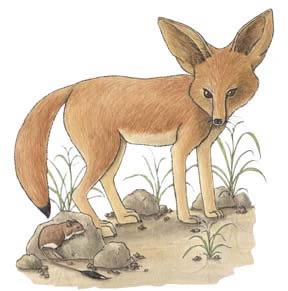
They are the smallest fox in the world. Including their tail foot-long tail, they are only 2.5 feet long. They are tan colored to blend with their sandy habitat. They have very large ears that help cool them. They do this at night when the air is cold and blood circulating through the ears is cooled by the night air. They have fur on the bottoms of their feet to protect them from the hot sand.Habits
They are mostly active at night (nocturnal). During the day they rest in burrows, which they share with other fennecs. Males mark their territories with urine.Diet
They eat both plants and small animals (omnivorous), such as rodents, birds eggs, reptiles and insects. They don’t need to drink water to survive as they get enough moisture in the things they eat.Predators
They are hunted by snakes, hyena, jackal, desert cats and big birds of prey.Reproduction
Females are pregnant for about 7 weeks and have 2-5 young.Lifespan and/or Conservation Status
They can live up to 10 years in the wild, usually less. Their conservation status is unknown.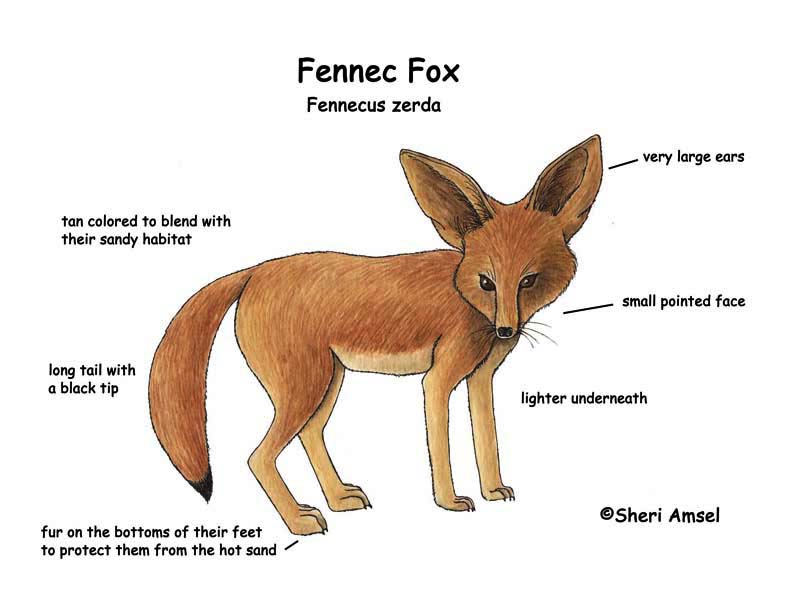
Classification
- Kingdom: Animalia
- Phylum: Chordata
- Subphylum: Vertebrata
- Class: Mammalia
- Order: Carnivora
- Suborder: Caniformia
- Family: Canidae
- Genus: Vulpes
- Species: Vulpes zerda