

Hylobates lar
Range
Gibbons are found in Asia, on the Malay Peninsula, Burma, and the Island of Sumatra.Habitat
They live in the forest in family groups.Body Traits
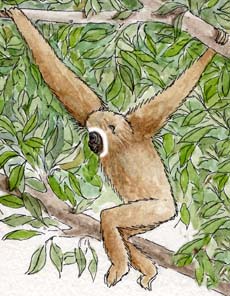
Gibbons are “apes” so have no tails. Their arms are longer than their bodies so are well adapted for moving around in the treetops. Gibbons can weigh up to 25 pounds. They vary in color from black to yellow and have a “throat sac” that helps them make their loud call. They use their call to mark their territory.Habits
They hang from branches, instead of perching on top of them like other apes.Diet
They eat fruit, leaves and insects, feeding for many hours a day.Predators
Their predators are large birds of prey, snakes and wild cats.Reproduction
Gibbons only have babies every 2-3 years. They have just 1 mate. Females are pregnant for 8 months (gestation) and have 1 young.Lifespan and/or Conservation Status
They live about 35 years in the wild. They are listed as Lower Risk – Near Threatened.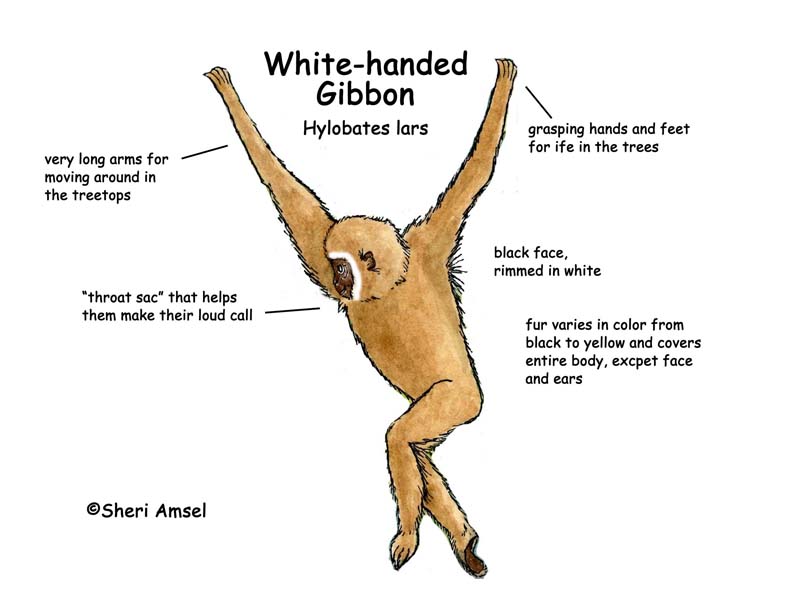
Classification
- Kingdom: Animalia
- Phylum: Chordata
- Subphylum: Vertebrata
- Class: Mammalia
- Order: Primates
- Suborder: Haplorrhini
- Family: Hylobatidae
- Genus: Hylobates
- Species: Hylobates lar