

Rhinoceros unicornis
Range
They are found in Northeastern India, Pakistan and Nepal.
Habitat
They live in grasslands, shrublands, open forest and swamps.
Body Traits
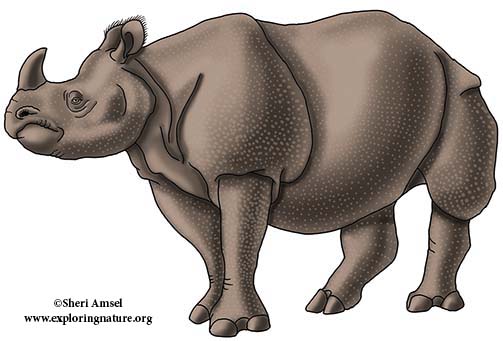
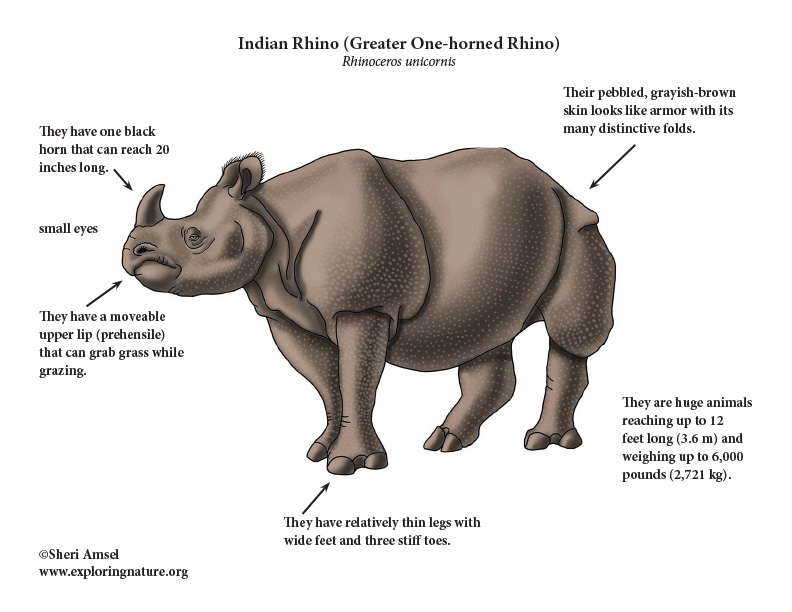
They are huge animals reaching up to 12 feet long (3.6 m) and weighing up to 6,000 pounds (2,721 kg). They have one black horn that can reach 20 inches long. Their pebbled, grayish-brown skin looks like armor with its many distinctive folds. They have a moveable upper lip (prehensile) that can grab grass while grazing.
Habits
Males live in alone (solitary) except when mating. Females are also solitary except for their calf. They may be seen around each other while wallowing in the mud or our grazing. They can be aggressive and charge each other using their horn. They are active at night, at dawn and dusk and rest during the heat of the day.
Diet
They are herbivores eating grass, leaves, fruits and aquatic (water) plants.
Predators
The only predator that can really challenge an Indian rhino is man and they were almost hunted to extinction for their horn.
Reproduction
Females have calves about every 3 years. They are pregnant for about 16 months (gestation). They have one calf and nurse them for 1-1.5 years. Breeding occurs any time of year.
Lifespan and/or Conservation Status
They can live about 40 years in the wild. They are listed as vulnerable after recovering from near extinction from hunting.
Classification
Kingdom: Animalia
Phylum: Chordata
Subphylum: Vertebrata
Class: Mammalia
Order: Perissodactyla
Family: Rhinocerotidae
Genus: Rhinoceros
Species: Rhinoceros unicornis