

Lepilemur mustelinus
Range
They are found on the island of Madagascar.Habitat
They live in wet forests.Body Traits
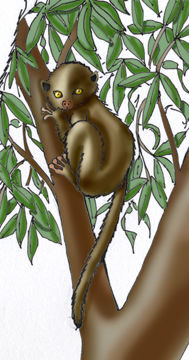
They are about 1 foot long (30cm) or 2 feet long including their long tail (60+ cm). They have reddish-brown fur on their backs that is grayer on their belly and gets darker toward the tip of the tail. They have big eyes and ears you can see (as opposed to many lemurs who have ears hidden in tufts of hair.)Habits
They are active at night (nocturnal). They live up in the trees (arboreal), leaping from tree to tree, though sometimes they do come down to the ground. During the day they sleep in tree holes. Males live alone except to mate and have a loud call to mark their territory. Females live with young.Diet
They eat leaves and some fruit, bark and flowers. They feed by pulling the branch to their mouths and chewing the leaves off. They have been known to eat their own dung to get more nutrients from it.Predators
They are killed by snakes eagles, fossa and man.Reproduction
Females are pregnant for 4.5 months (gestation) and have 1 baby.Lifespan and/or Conservation Status
They can live more than 10 years in captivity. Unknown in the wild. They are listed as Lower Risk – near threatened.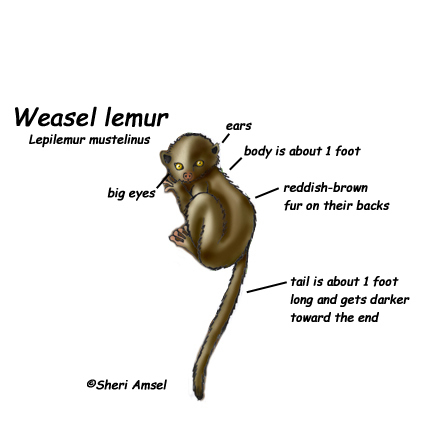
Classification
- Kingdom: Animalia
- Phylum: Chordata
- Subphylum: Vertebrata
- Class: Mammalia
- Order: Primates
- Suborder: Strepsirrhini
- Family: Lepilemuridae
- Genus: Lepilemur
- Species: Lepilemur mustelinus