

Felis concolor
Range
They are found from southern Canada to the southern tip of South America.Habitat
They can live in many habitats from desert scrublands to mountain forests.Body Traits
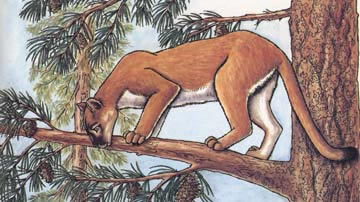
They can reach up to 8 feet long and 220 lbs. Females are smaller. They are a tawny yellow to gray color. Their head is marked with black on the sides of the muzzle and on the backs of the ears. They have a long tail that helps counter balance their weight when they climb and leap.Habits
They live alone except to mate and have a territory that can be as big as 100 square miles. Like house cats, they stalk their prey and leap on them. They drag their prey to a safe place before eating them and will bury them to feed later. Though rare, they do sometimes attack humans.Diet
They eat white-tailed deer, mule deer, bighorn sheep and pronghorn antelope, hares, and even rodents.Predators
Man is their only real threat.Reproduction
Females are pregnant for about 3.5 months (gestation) and have 1-3 cubs.Lifespan and/or Conservation Status
They can live 12-15 years in the wild. They are listed as near threatened on the CITES List (International List) and endangered on the U.S. Federal Endangered Species List.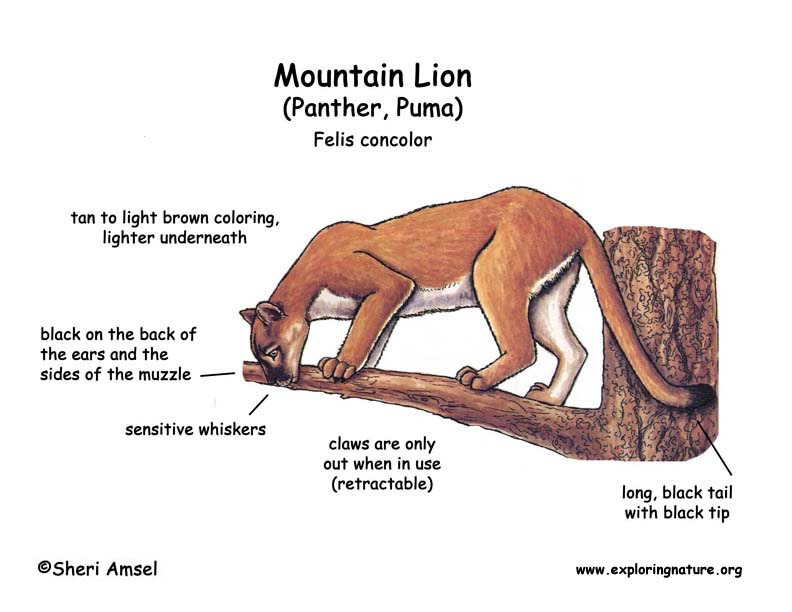
Classification
- Kingdom: Animalia
- Phylum: Chordata
- Subphylum: Vertebrata
- Class: Mammalia
- Order: Carnivora
- Suborder: Feliformia
- Family: Felidae
- Subfamily: Felinae
- Genus: Puma
- Species: Puma concolor