

Rattus norvegicus
Range
They are found on all the continents in the world except Antarctica. They are thought to have come from Asia and spread via ships throughout the world.Habitat
They are found anywhere people live. They may have originally lived in forests and fields, but they have adapted very well to very urban habitats and in fact seem to do extremely well in their new habitats. Anywhere there is refuse (garbage) like dumps and sewers provides food and shelter to rats.Body Traits
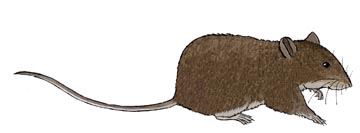
They have rough, dark fur, from gray to brown and are lighter underneath. They can reach 20 inches long including the tail (the tail can be as long as the body) and weigh ¾ of a pound. They have a great sense of smell.Habits
They are active at night (nocturnal) hunting for food and bringing things back to their burrows. They dig large, complex burrows and make nests of foliage and trash. They live in groups, often near water, and are good swimmers.Diet
They are considered omnivores and scavengers and will eat almost any organic matter.Predators
They are eaten by cats, dogs, coyote, wild mammals, birds of prey, and man.Reproduction
Females are pregnant for 3 weeks (gestation) and have about a half dozen young (though a dozen are possible!). They breed year-round, having litters every couple of months.Lifespan and/or Conservation Status
They rarely live more than 1 year in the wild, but can live up to 4. They are listed as Lower Risk – least concern.
Classification
- Kingdom: Animalia
- Phylum: Chordata
- Subphylum: Vertebrata
- Class: Mammalia
- Order: Rodentia
- Suborder: Myomorpha
- Family: Muridae
- Subfamily: Murinae
- Genus: Rattus
- Species: Rattus norvegicus