

Ceratotherium simum
Range
They are found in Africa. (There are five species of rhino: the black and white rhino in Africa, the Asian rhino, Indian rhino and Javan rhino. All rhinos are very endangered.)Habitat
The white rhino lives on the African grasslands (savanna).Body Traits
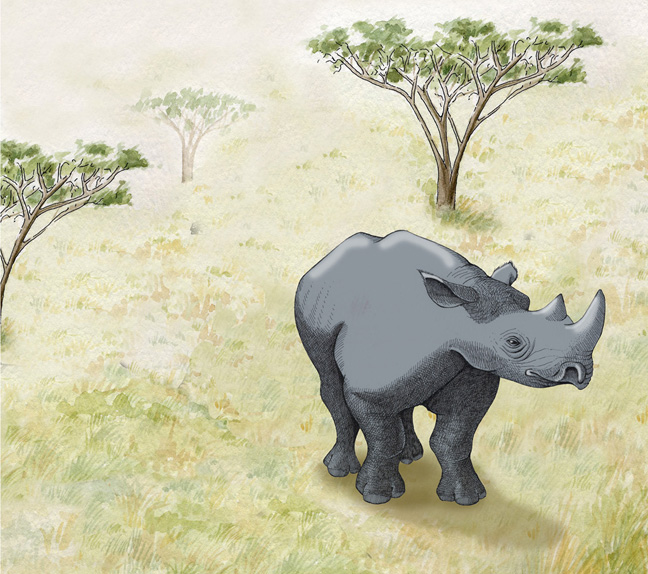
They are the second largest land animal after the elephant. They can weigh up to 8,000 pounds (4 tons). They have two horns and square-shaped lips made for eating grass (grazing).Habits
They live alone except when mating. Both males and females have a territory that they defend from other rhinos. They use their horns to fight off other rhinos and also to scare off predators to their young, like lions or hyenas.Diet
They eat only plants (herbivores).Predators
Their only real predator as adults is man. Young rhinos are hunted by lions or hyenas in a group.Reproduction
Females are pregnant for 14 – 18 months (gestation) and have one baby. It can start eating grass within a few days but nursing milk for a year.Lifespan and/or Conservation Status
They can live for 35 years in the wild. The Southern white rhino is listed as Lower Risk – conservation dependent, but the Northern white rhino is listed as critically endangered.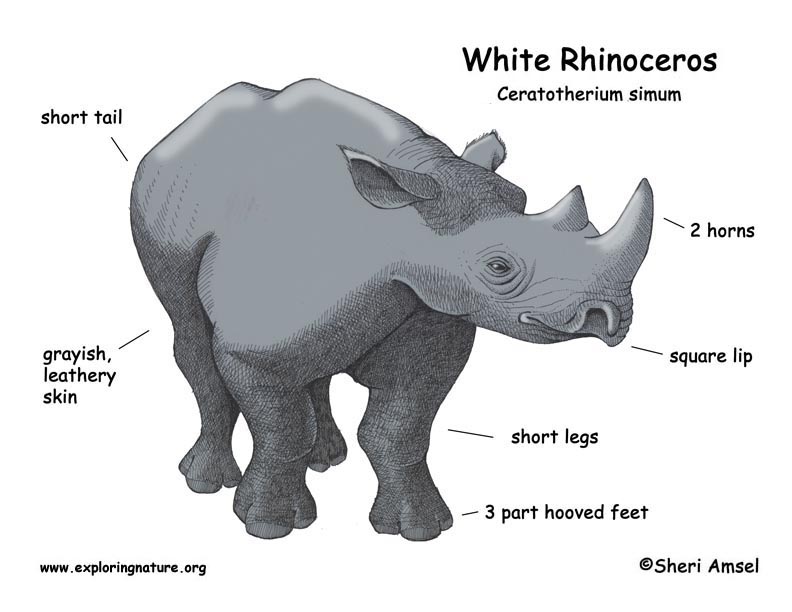
Classification
- Kingdom: Animalia
- Phylum: Chordata
- Subphylum: Vertebrata
- Class: Mammalia
- Order: Perissodactyla
- Family: Rhinocerotidae
- Genus: Ceratotherium
- Species: Ceratotherium simu