

Callorhinus ursinus
Range
They are found all over the northern Pacific Ocean from the Bering Sea, north of the Aleutian Islands, in Alaska down to southern California and across to central Japan.Habitat
They live in the northern waters of the Pacific Ocean and breed on the rocky coasts.Body Traits
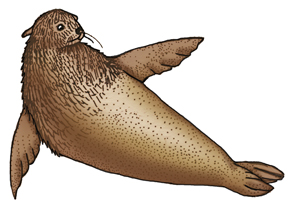
Males can weigh up to 600 pounds with thick, muscular necks covered in dark fur. Females only weigh about 120 pounds. They have small ears (unlike true seals, who have no ears you can see). Their back flippers can be turned to face front for walking on land. They have strong front flippers for swimming (true seals use their back flippers for swimming).Habits
Males are called “bulls” and fight for breeding territory. They have sharp canine teeth and bite big gashes in each other’s necks. Only the biggest, strongest males get to breed with females. This is tiring for the lead males, sometimes called the “beachmaster.” They have no time to eat during the whole breeding season. They will lose 1/5 of his whole body weight before it is over. Males live near their territories all winter. Females will travel south (migrate) and come back to have their young the next summer.Diet
They eat fish and squid.Predators
They are hunted by killer whales, great white sharks and larger sea lions.Reproduction
Females come to the beaches to have their young. Then they mate with the winning male. They are pregnant for almost 12 months (gestation). They have one baby, within 2 days of coming to the beach.Lifespan and/or Conservation Status
They can live for 25 years. They are listed as a “vulnerable” species.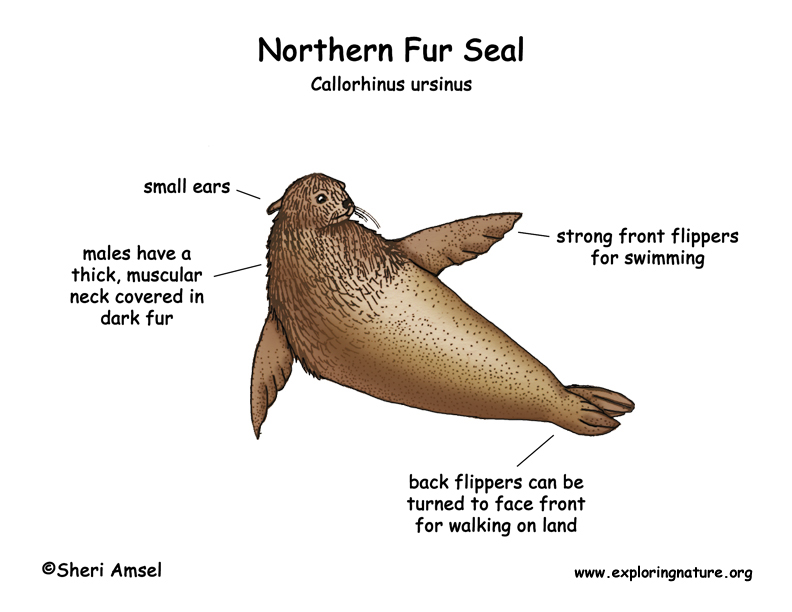
Classification
- Kingdom: Animalia
- Phylum: Chordata
- Subphylum: Vertebrata
- Class: Mammalia
- Order: Carnivora
- Suborder: Caniformia
- Family: Otariidae
- Genus: Callorhinus
- Species: Callorhinus ursinus