

Delphinapterus leucas
Range
They are found in arctic waters along the coasts of Canada, Alaska, Russia, Norway and Greenland.Habitat
In the summer, they are found where rivers meet the ocean, where the water is warm and shallow and not as salty as the open ocean (brackish). They often travel up and down the coasts.Body Traits
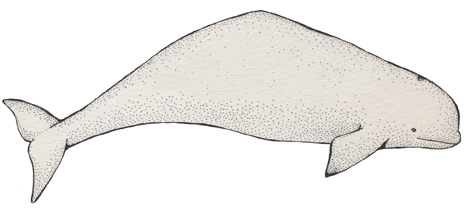
They are all white as adults (they are born dark-colored) with a ridge down their backs instead of a dorsal fin. Males reach more than 2,000 pounds (a ton) and 14 feet long. Females are smaller. They have more than 3 inches of blubber to keep them warm.Habits
They travel a long way between seasons (migration). They have good hearing and use radar (echolocation) to hunt fish in dark waters. They can dive to more than 2,000 feet looking for fish. They also make a lot of calls to each other with whistles, squawks and grunts.Diet
They are toothed whales and feed on fish and other small ocean creatures.Predators
They are hunted by polar bears and killer whales.Reproduction
Females are pregnant for 14 months (gestation). They only have one calf every 3 years.Lifespan and/or Conservation Status
They can live up to 30 years in the wild. They are listed as a “vulnerable” species.
Classification
- Kingdom: Animalia
- Phylum: Chordata
- Subphylum: Vertebrata
- Class: Mammalia
- Order: Cetacea
- Suborder: Odontoceti
- Family: Monodontidae
- Genus: Delphinapterus
- Species: Delphinapterus leucas