

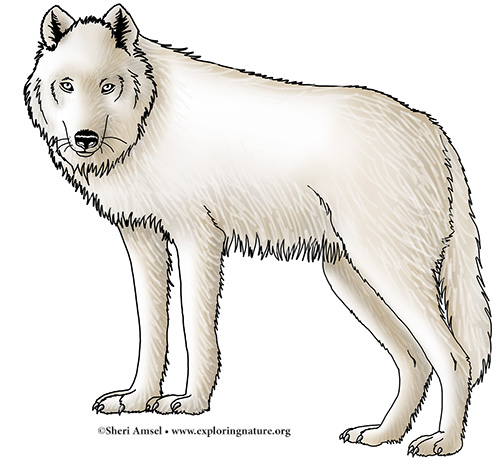
Canis lupus tundrarum
Range
They are found throughout the Arctic.Habitat
They live on the rocky, open tundra.Body Traits
They can reach 5 feet long and weigh up to 100 pounds. They are the largest of the wolves. They have a thick, all white coat that covers their whole body, including their feet. They have smaller ears, shorter snouts and legs and weigh more than timber wolves. These are all things that help the arctic wolf survive the cold.Habits
They don’t make dens. They sleep out in the cold, wrapping their tails to protect their faces. They howl like all wolves, but also whimper, whine, growl, bark, and yip. Researchers think that wolves howl to mark their territory.Diet
They eat Arctic hares, lemmings, caribou and young musk oxen (carnivores).Predators
Their only real predator is man.Reproduction
Females are pregnant for 9 weeks (gestation). She has 6-7 pups in her litter, born May-June. The male brings food to her while she is still nursing. In a pack, only the top wolves (alpha) have pups. The whole pack will take turns feeding, caring for and teaching the pups.Lifespan and/or Conservation Status
They can live up to 10 years in the wild. They are listed as near threatened on the CITES List (International List) and endangered on the U.S. Federal Endangered Species List.
Classification
- Kingdom: Animalia
- Phylum: Chordata
- Class: Mammalia
- Order: Carnivora
- Family: Canidae
- Genus: Canis
- Species: Canis lupus
- Subspecies: Canis lupus arctos